Be brave or die

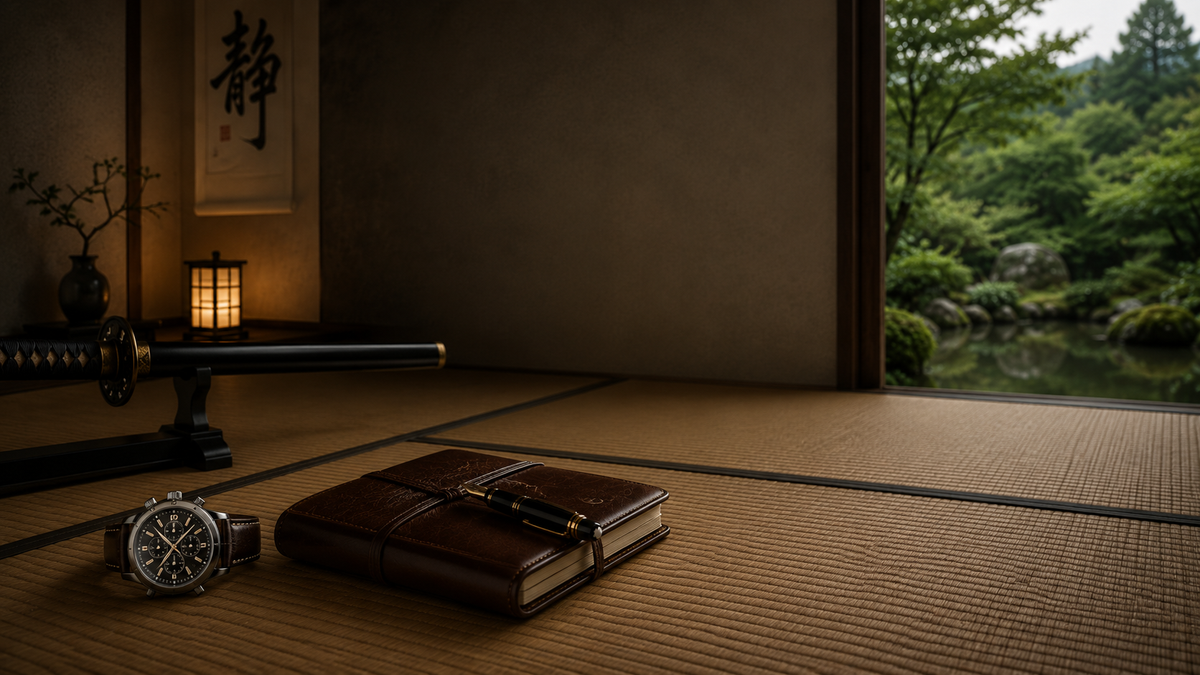
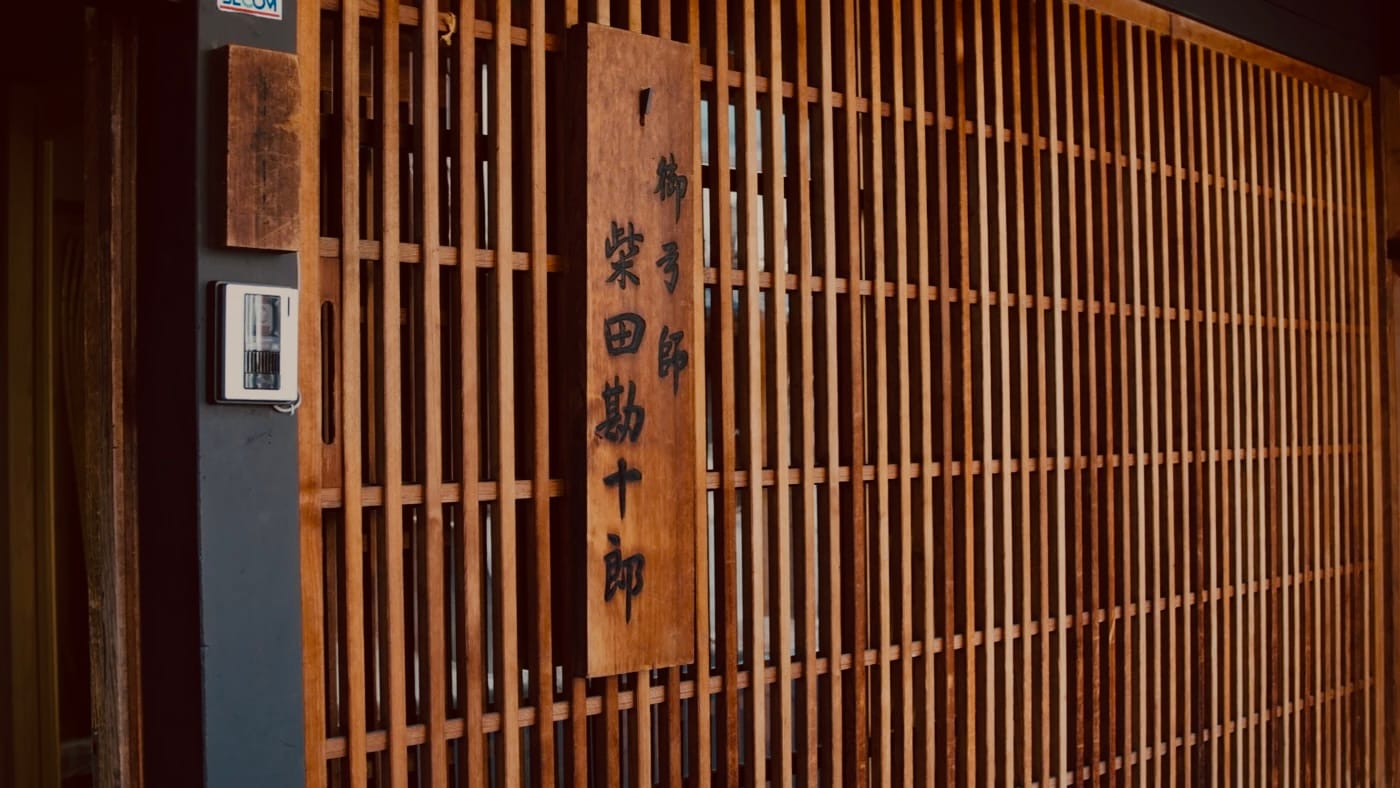
There is a particular kind of silence that exists only where things are made by hand, slowly, over centuries. It is not the dead silence of an empty room, but a heavy, attentive quietness. You can hear it in the northern suburbs of Munich, where the waterwheel at the Nymphenburg palace manufactory still turns with a low, rhythmic thud, powered by the same canal that fed it in the eighteenth century. You can hear it in a tatami room in Kyoto, in the minute scrape of a plane against aged bamboo as a member of the Shibata Kanjuro lineage shapes a yumi longbow. And you can find it in the hills of Ishikawa, where the faint, sweet smell of pine smoke still rises from a climbing kiln, burying traditional Kutani ceramics in ash and fire.
To the modern observer, trained in the grammar of efficiency, optimization, and quarterly growth, these places look like beautiful anomalies. Economically speaking, they are entirely irrational. They require too much time, occupy too much valuable space, and rely on human hands that are stubborn, expensive, and fragile.
Yet, it is precisely this irrationality that draws a specific kind of collector; those whose wealth is accompanied by a certain depth of cultural education. These individuals do not buy objects to advertise their bank accounts; they have long since outgrown the need for noisy validation, they are drawn to things that require restraint, patience, and human sacrifice because they understand a fundamental truth that our hurried world has forgotten: true luxury is not about price. It is about values, sacrifice, and the quiet decision to do the right thing when every economic indicator screams at you to do otherwise.
The wealthy do not truly buy price. They buy evidence of principles.
The Weight of the Lineage
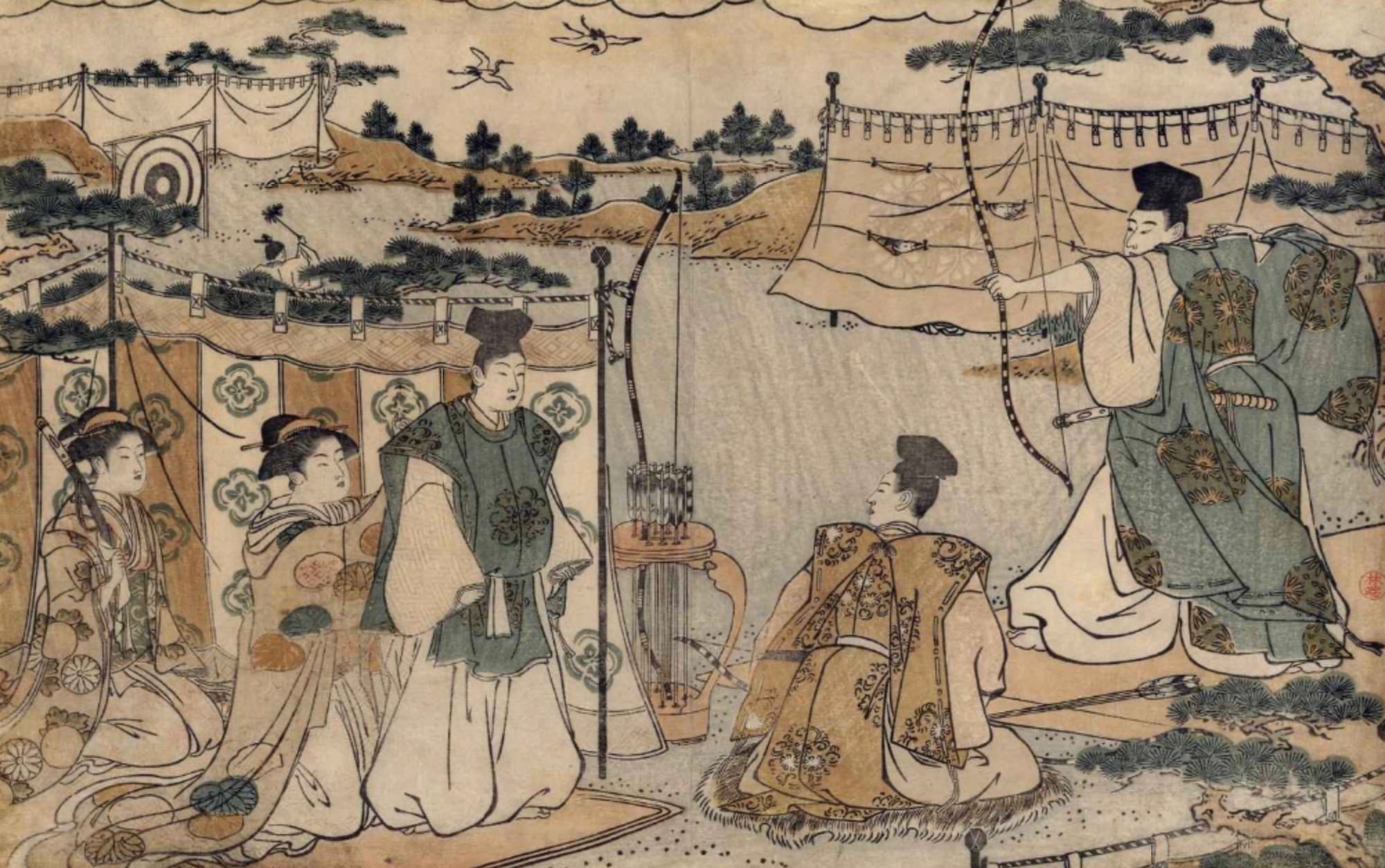
Consider the yumi(弓), the traditional Japanese longbow. In an era of carbon fiber and mechanized tension testing, the Shibata Kanjuro family, now in its twenty-first generation -continues to build these over-two-meter-high bows from laminations of bamboo and wax tree wood. The process cannot be hastened. The bamboo must be cut in the winter, cured for years, and curved entirely by eye using wooden wedges and hemp rope.
There is an old saying in the Hagakure, the classic text on the warrior’s path, that hints at the spirit required for such work: "Mastery is a matter of daily, unremitting discipline." For the shokunin (職人), the artisan who views craftsmanship not as a job but as a moral responsibility, there is no distinction between the quality of the object and the quality of their own soul. If the bowmaker has a fractured mind, the bow will twist under tension. The object is a mirror.
+-----------------------------------------------------------------+
|                       The Shokunin Mirror                       |
|                                                                 |
|   [ The Artisan's Mind ]  ========>  [ The Creative Process ]  |
|      Discipline, Patience               Years of Slow Curing    |
|               ||                                 ||             |
|               \/                                 \/             |
|   [ The Quality of Soul ] <========  [ The Finished Object ]    |
|      Quiet Dignity, Grace               The Unwavering Bow      |
+-----------------------------------------------------------------+
This structural integrity mirrors the philosophical foundation of the martial arts practiced with these very weapons. A well-known principle in Kyūdō (traditional Japanese archery) states:
"A correct shot always hits the target."
The philosophy behind Seisha Hitchū (正射必中) is that a technically and spiritually correct execution inevitably leads to a successful hit. The archer who stares obsessively at the target, consumed by the desperate desire to hit the bullseye, will almost always compromise their posture, their breathing, and their state of mind. Conversely, the archer who perfects the internal and external form of the shot will find that hitting the target becomes a natural, effortless byproduct.
It is a mindset deeply rooted in Kendō as well. A swordsman does not execute a flawless Men (a strike to the head) simply because they are hungry for a point. The strike succeeds because Kamae (posture), Maai (distance), Seme (spiritual pressure), Tame (retained energy), and Zanshin (lingering awareness) are perfectly aligned.
A traditional master would likely tell an impatient student: "Do not try to hit the target. Focus entirely on executing the correct shot. The target will take care of being hit."
A Reflection on Zanshin and Self-Correction
A close friend of mine, who holds the rank of 5th Dan in Kyūdō, once parsed the subtle nuance of this proverb for me. While it sounds deceptively straightforward, he noted that its true utility emerges not in victory, but in the vulnerable moments of failure:
"Seisha Hitchū is most commonly used to help us reflect on what went wrong after missing a shot -specifically during zanshin, the period of remaining awareness following the arrow's release.
That being said, while it is certainly possible to hit the target with poor form, this phrase is never used to backward-engineer a clumsy success. One cannot say: 'I hit, therefore my form is correct.' Instead, it is a relentless call to self-honesty. It encourages us to constantly improve our form and to think critically about what 'correct shooting' actually means, rather than resting on the laurels of an accidental bullseye."
The Elegance of Imperfection
When applied to the workshop, this principle explains why the master artisan is entirely detached from modern metrics of volume and speed. They do not fixate on the "target" of market share or profit margins; they focus entirely on the correctness of the process, knowing that true value is an inevitable consequence of an uncompromising path.
Across the world, in the bright Bavarian winter light of the Nymphenburg workshops, a parallel drama unfolds. Here, they do not buy pre-mixed clay or use industrial liquid glazes. The porcelain paste is prepared on-site, aged in subterranean vaults for years to achieve the necessary plasticity, and shaped on wheels driven by that ancient waterwheel. When a painter sits down to decorate a "Cumberland" plate, they work without a stencil, mixing their pigments from raw mineral powders and aromatic oils of clove and lavender. It takes up to fifteen years of training before an artisan is permitted to paint these complex historical patterns.

To the modern corporate accountant, this is madness. Why keep raw paste aging in a cellar when you can buy industrial porcelain body by the ton? Why allow a painter three weeks to complete a single plate when a digital printer could replicate the pattern in seconds?
The answer lies in the concept of dignity under economic pressure. Both the Kyoto bowmaker and the Munich porcelain master are engaged in an act of preservation that borders on the religious. They are protecting meaning instead of maximizing growth. They have lived through wars, fires, currency collapses, and the cheapening of global taste, and they have survived by refusing to give an inch to the spirit of the age.
There is a profound connection here to the aesthetic philosophy of wabi-sabi; the appreciation of that which is imperfect, impermanent, and incomplete. In traditional Kutaniyaki pottery, particularly the old styles that rely on regional clay from Ishikawa, the beauty is found in the slight irregularities of the glaze, the depth of the dark red iron oxide (aka-e), and the way the piece changes over decades of use. The kiln is unpredictable; the wood fire introduces elements of chance that a modern electric oven completely eliminates.
When you hold a piece of true Kutani, you are holding the history of the kiln's smoke, the mineral composition of a specific hillside, and the physical fatigue of the potter who stayed awake for seventy-two hours to tend the fire.
This is the exact quality that sophisticated collectors look for, whether they are analyzing a Japanese ceramic or an intricate mechanical timepiece from the Vallée de Joux in Switzerland. Think of the quiet ateliers of old European watchmaking houses. Places like Vacheron Constantin or Breguet. For generations, these horological masters worked in low-ceilinged rooms overlooking snow-covered pine trees, using hand-turned rose engines to guilloché a dial, or spending days beveling the microscopic edges of a bridge that no one but a watchmaker would ever see.
When an educated person looks at a hand-beveled internal angle on a watch movement or the irregular glaze of a Kutani bowl, they are looking at the same thing: the deliberate rejection of the easy path. A CNC machine can cut a perfect curve, and an automated stamping machine can produce a flawless dial, but they leave the object cold. They contain no sacrifice. The mechanical watch, much like the bamboo bow, is anachronistic. It does not keep time as accurately as a smartphone, nor does it shoot an arrow as easily as a modern compound bow. But it possesses a soul because someone had to give up a portion of their life to make it work.
The Anatomy of True Patronage
There is an old, slightly worn leather chair in the corner of many great workshops where patrons have sat for generations. The people who sit in these chairs understand that their relationship with the artisan is not a standard transaction. It is a form of stewardship.
When you buy an object from a lineage that has survived since the Edo period or the Holy Roman Empire, you are not paying for the material costs. You are paying for the survival of the technique. You are funding the years the apprentice spent making mistakes; you are paying for the wood that burned in a kiln that produced only three perfect pieces out of a hundred.
This requires a form of cultural maturity that cannot be purchased at a boutique or learned from a social media feed. The modern world is obsessed with the new, the fast, and the disruptive. It is a culture that celebrates the entrepreneur who builds an app in eighteen months and sells it for millions. But there is a deeper, quieter respect reserved for the house that has done the same thing, in the same way, with the same uncompromising standards, for four hundred years.
Consider the similarities that bind these disparate traditions together:
- Survival through difficult times: They do not bend to changing fashions; they wait for the world to return to its senses.
- The refusal of industrial shortcuts: They understand that when you change the process, you change the destination.
- Preserving the economically inefficient: They treat old tools, handwritten ledgers, and waterwheels not as museum pieces, but as living participants in the craft.
- Craftsmanship as a moral responsibility: A mistake is not an accounting error; it is a compromise of one's personal honor.
This is why the objects created by these houses carry an unmistakable weight. They possess a quiet confidence that doesn't need to shout. They do not have large logos; they do not require aggressive marketing campaigns. Like a fine Patek Philippe passed down through three generations, or a Nymphenburg figurine that has stood on the same mantlepiece since the winter of 1790, their value is self-evident to those who know how to look.
The Return to the Sanctuary
Why is it that in our ultra-connected, hyper-efficient world, we crave these quiet objects more than ever? Perhaps it is because our lives have become increasingly weightless. We spend our days staring at pixels, manipulating digital data, and communicating through glowing glass screens. Everything around us is designed to be replaced within two years. We live in a disposable culture, and it leaves our souls feeling slightly thin.
An object made with the shokunin spirit acts as an anchor. When you touch a bow that was shaped by a man whose grandfather made bows for the Emperor, or when you drink tea from a bowl that was fired in an old climbing kiln, you are touching something permanent. You are participating in an unbroken chain of human intention.
It is a form of sanctuary. In the presence of these objects, the noise of the modern world fades. The frantic race for growth, the constant demands of the market, the relentless pressure to optimize; all of it seems incredibly small when compared to a tradition that measures its progress not in quarters, but in centuries.
The night is turning a little fresh now, and the rain that began this morning in Kyoto has settled into a quiet, steady mist. In the dim light of this old hotel bar, where the wood is dark and the ice melts slowly in the glass, one can see the world with a bit more clarity.
The frantic rush of modern commerce, with its bright lights and loud promises, starts to look less like progress and more like a temporary distraction. The things that truly matter have always been quiet. They have always required a certain amount of sacrifice, a willingness to be misunderstood by the crowd, and the patience to wait for the fire to cool.
In the end, we do not own these objects. We merely look after them for a short while, grateful that in a world of passing shadows, someone chose to spend their life making something that would last.
Recommended Reading for the Quiet Mind
To explore these themes of discipline, craftsmanship, and the philosophy of the enduring object more deeply, consider spending an evening with the following texts:
- The Unknown Craftsman: A Japanese Insight into Beauty by Soetsu Yanagi – A beautiful defense of the ordinary, handmade object and the spiritual health of the artisan.
- In Praise of Shadows by Jun'ichiro Tanizaki – An essay on Japanese aesthetics that explores the beauty of patina, age, and the quiet spaces that modern efficiency threatens to destroy.
- The Craftsman by Richard Sennett – A thoughtful exploration of why the desire to do a job well for its own sake is one of the most fundamental and rewarding human impulses.
- Kyudo: The Essence and Practice of Japanese Archery
Hideharu Onuma with Dan and Jackie DeProspero. This book is a globally respected guide to Japanese archery (Kyudo). With hundreds of photographs and illustrations, it covers history, philosophy, equipment, and technique. Widely regarded as the definitive reference on Kyudo. - Japanese ceramics: From Raku to Kutani by Hermann Kandahashi. A refined journey through the world of Japanese ceramics, where craftsmanship, tradition, and beauty converge. From the quiet simplicity of Raku to the vibrant elegance of Kutani, this book explores the forms, philosophies, and heritage that have shaped Japan’s ceramic arts for centuries. An essential volume for collectors, connoisseurs, and admirers of timeless craftsmanship.
- Nymphenburger Porzellan: Sammlung Bäuml A rare glimpse into one of Germany’s finest private collections of Nymphenburg porcelain. Built over generations, the Bäuml Collection reflects a world where craftsmanship, refinement, and cultural heritage mattered more than fashion or trends. Richly illustrated, this volume celebrates the timeless elegance of Nymphenburg and the enduring value of collecting beautiful things with patience, knowledge, and taste. For collectors, connoisseurs, and those who appreciate the quiet luxury of true craftsmanship.