When Obedience Becomes Culture: Of Hull Lines, Hand-Stitched Bogu, and the Quiet Rebellion to believe in old values.

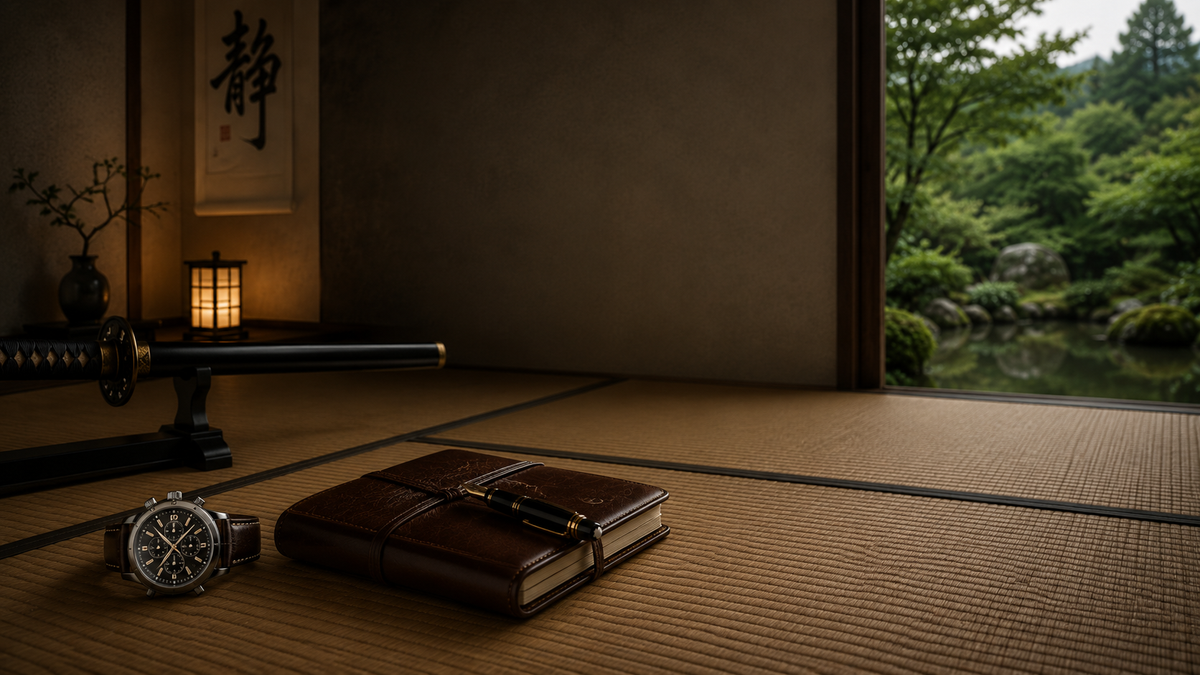
Those who favour the first hours of the day understand that silence has its own address. There’s a rather wonderful sort of solitude that only lives inside a workshop on a early morning, whether you’re looking out at the grey chop of the Solent or tucked into the mist on the edge of my second home in Gifu. It’s a very specific quiet scenery. It isn’t that life has stopped; it’s just that urgency has been politely asked to wait outside, much like the slow drift of an afternoon in the Japanese countryside. In these spaces, the air carries a familiar weight-the scent of damp cedar, the sharp tang of hot oil, or the faint, sweet trace of kiln smoke drifting over seasoned timber. Here, time is measured not by the ticks of a digital clock, but by the slow, deliberate movement of human hands.
For those who have spent a lifetime observing the currents of culture and commerce, a troubling realization emerges: our modern world has become obsessed with a version of luxury that is loud, immediate, and ultimately hollow. We are told that excellence is a function of price, that status is an equation balanced by visibility.
Yet, true sovereign craft reveals itself to be something entirely different. It has nothing to do with excess or the performative consumption that fills contemporary feeds. Instead, it resides in values, in historical continuity, and in the quiet, stubborn decision to do the right thing even when it is economically irrational.
To understand this is to look past the surface of an object and see the invisible sacrifices required to bring it into being. The most culturally educated minds are not drawn to items that merely broadcast wealth; they are drawn to traditions that demand patience, restraint, and an unyielding commitment to human mastery. They seek out the work of houses that have looked into the abyss of modern efficiency and chosen, with immense dignity, to preserve what makes us human.
„Stille im Sturm“: Mastering the Elements on Open Water
Consider the sea. There is no environment less forgiving, nor any landscape that so ruthlessly exposes pretension. When a squall hits and the sky turns the color of bruised slate, the aesthetic of a vessel matters far less than its structural integrity. Yet, in the philosophy of true craftsmanship, technique and aesthetics are not separate concerns; they are the same virtue expressed in different dimensions.
In the world of yacht building, names like Sanlorenzo, Wally, or Riva are often invoked to describe a certain sleek, contemporary mastery of the water. They represent a marriage of high engineering and understated elegance, what the Germans might call Stille im Sturm, a profound stillness in the midst of the storm. They achieve a quietness on the open ocean through the absolute command of form and materials.
                  [ TRADITIONAL CRAFTSMANSHIP ]
                   (Ancient Shipwright Wisdom)
                                │
                                ▼
                       [ THE NEXUS OF FORM ]
             (Where Heritage Meets Modern Fluid Dynamics)
                                │
                                ▼
                   [ MODERN YACHT CRAFTING DISCIPLINE ]
               (Over-specified Strength & Human Finish)
Look closely at a house like Oyster Yachts, whose shipyards draw upon more than a century of local boatbuilding expertise in Norfolk and Southampton. In an era where the marine industry has largely embraced lightweight, highly automated mass production to maximize margins, these builders continue to lay down hulls with an uncompromising, almost archaic dedication to strength.
Their hulls are constructed with over-specified laminate structures, reinforced with an intricate grid of stringers and floors designed to withstand conditions most owners will luckily never encounter. To the cold eye of a spreadsheet, this level of reinforcement is unnecessary. It represents a surplus of safety, a massive investment in hidden materials that will spend its entire life submerged, invisible to the casual observer.
To step into the joinery workshop of such a yard is to step into a lineage. You will find master shipwrights hand-fitting solid teak decking, matching grain patterns with an accuracy that borders on the obsessive, and using hand tools that may well have belonged to their mentors forty years ago.
This is not done out of a naive refusal to modernize. New laminates and fluid dynamics are embraced where they serve the vessel's longevity, but out of a deep understanding that certain details can only be perfected by a human eye and a practiced hand. The result is a boat that behaves with an absolute lack of bad habits on the water. It is dry, solid, and balanced. It offers a sanctuary of quiet confidence when the wind rises, because someone chose to build it for the ocean, not for the showroom.
The Mahogany Sanctuary: Riva and the Geometry of Elegance
If the British shipwrights of the Atlantic coast approach boatbuilding as an engineering battle against a hostile ocean, the house of Riva has always treated it as a classical dialogue with the water. To fully comprehend this specific philosophy on the lakes and coastal waters of Europe, one must look to a small commune on the shores of Lake Iseo in northern Italy.
Founded in 1842 by Pietro Riva, the shipyard began not with a grand artistic vision, but with an act of desperate rescue. Following a sudden, devastating storm that shattered the local fishing fleet, a young Pietro repaired boats that others had written off as scrap. He established a reputation for fixing what was broken, and more importantly, for understanding why things break.
                      [ THE EVOLUTION OF RIVA ]

            1842: The Resilient Artisan (Pietro Riva)
               (Rebuilding Shattered Fishing Fleets)
                                │
                                ▼
         1950s: The Perfection of Material (Carlo Riva)
              (Sourcing Seasoned Mahogany & Chrome)
                                │
                                ▼
         The Aquarama: A Monument to Human Restraint
              (24 Layers of Lacquer, Hidden Frames)
By the 1950s, under the uncompromising eye of Carlo Riva, this pragmatic mastery transformed into something deeply poetic. Carlo did not merely want to build speedboats; he sought to build a floating architecture of absolute elegance. This pursuit culminated in 1962 with the introduction of the Aquarama; a vessel that became an international symbol of understated sophistication, not because it broadcasted wealth, but because it broadcasted restraint.
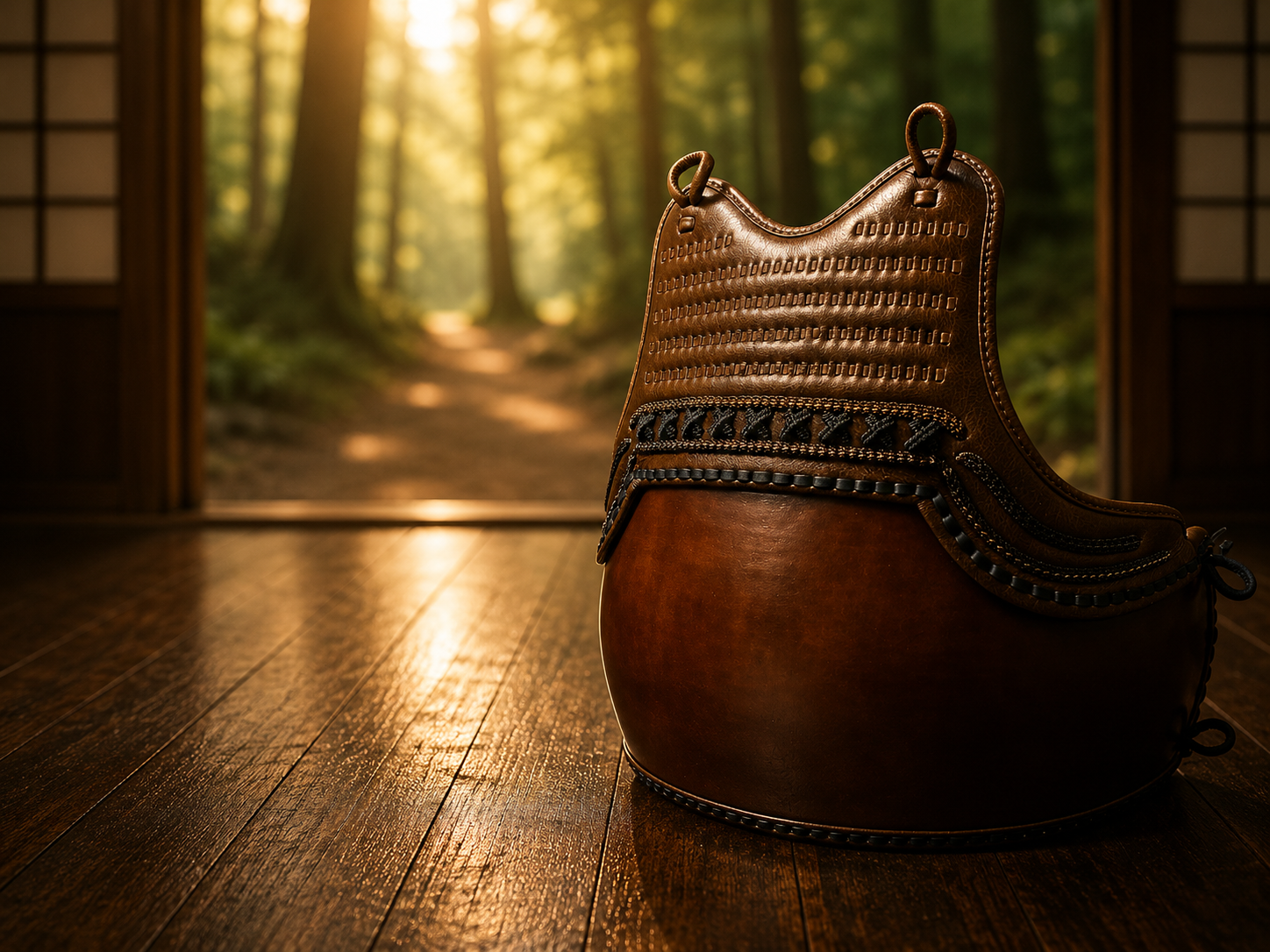
To look at a classic wooden Riva is to see the marine equivalent of a hand-stitched Do-tai or a hand-angled watch bridge. The hull is not built from fiberglass or composite plastics; it is sculpted from selected seasoned mahogany. Carlo Riva was notoriously obsessive about his materials, sourcing timber that had been dried for years to ensure its internal moisture content was perfectly uniform.
The skin of the boat is a marvel of invisible strength. It consists of multiple layers of mahogany planking, cross-laminated and bound with specialized resins, then fastened to an intricate inner frame of solid oak. Every screw hole is meticulously plugged with a matching wood bung, aligned perfectly with the direction of the grain so that the fastening disappears entirely beneath the finish.
               CROSS-SECTION: THE AQUARAMA SKIN
          ┌─────────────────────────────────────────┐
          │  24 Layers of Hand-Applied Lacquer     │
          ├─────────────────────────────────────────┤
          │  Outer Mahogany Planking (Grain-Matched)│
          ├─────────────────────────────────────────┤
          │  Cross-Laminated Mahogany Core Layers   │
          ├─────────────────────────────────────────┤
          │  Solid Oak Inner Frame Structures       │
          └─────────────────────────────────────────┘
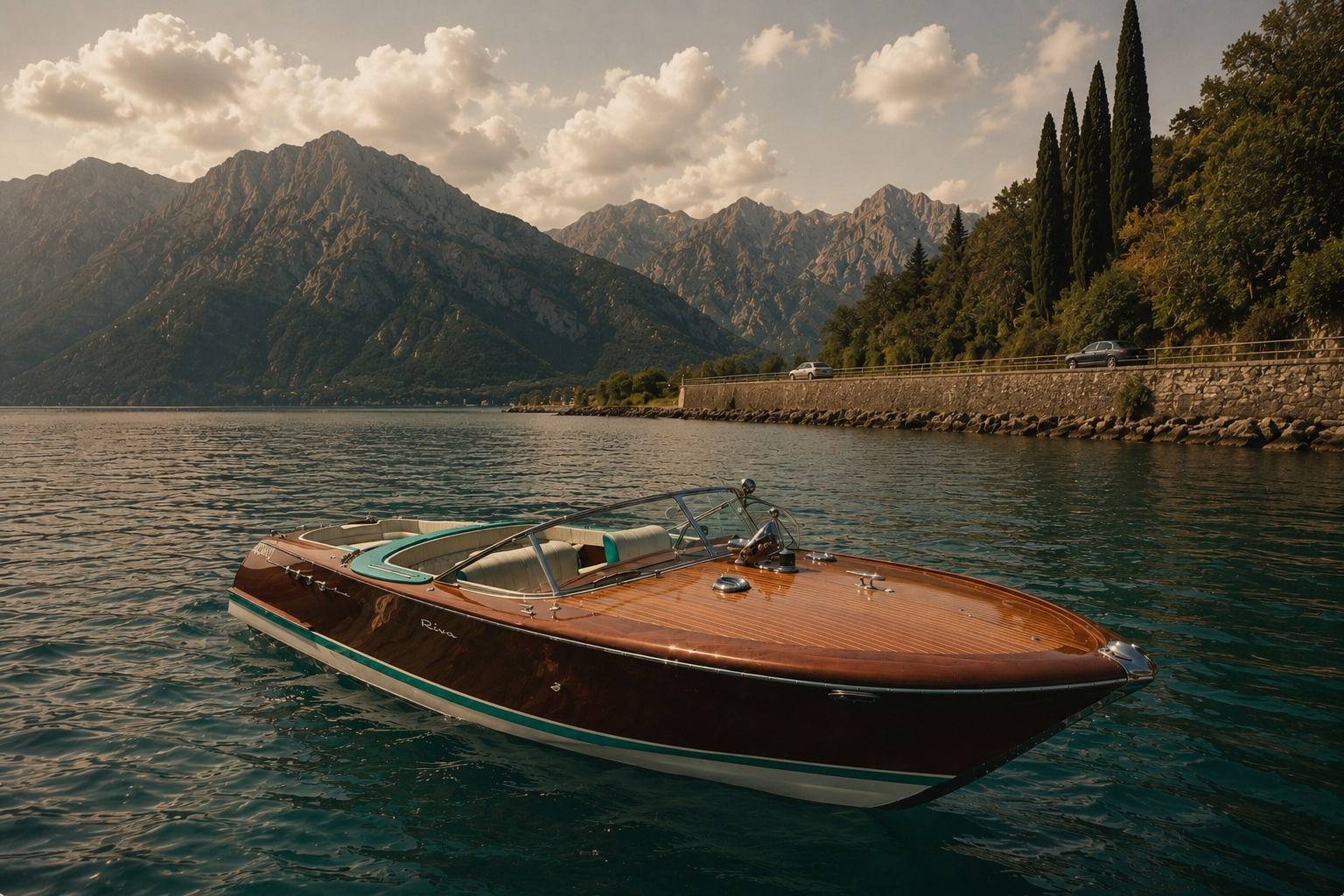
Then comes the lacquer. A classic Riva hull is treated with no fewer than twenty-four coats of varnish. This is not a superficial coating; it is a months-long ritual. The first layers are sprayed to establish depth, but the final, critical coats are applied entirely by hand using ultra-fine brushes. Between each individual coat, the entire hull is sanded down by hand, removing microscopic imperfections.
The result is a surface that does not look painted; it looks wet. It creates an optical depth where the mahogany grain seems to float beneath a solid block of amber ice. When the sun hits the deck, the wood reflects the light with a soft, organic warmth that synthetic materials can only mimic with cold distortion.
This level of detail extends to the custom-cast chrome hardware. Every cleat, air intake, and bezel on a Riva was designed in-house and cast from marine-grade brass before being heavily chromed. The lines of these fixtures are smooth and swept back, designed to deflect spray and wind while offering a perfectly tactile interface for the hand. To run your fingers over a Riva’s bow chock is to experience the same smooth, unbroken transition of form that a Kendo practitioner feels when handling a finely polished Men-gane (helmet grille).
On the open water, this obsession reveals its functional purpose. A Riva Aquarama does not slam against the waves; it slices through them, transferring the energy into a smooth, level plane. The weight of the solid timber and the precise geometry of the deep-V hull create a sensation of absolute stability. The boat behaves with an elegant lack of drama. It is an object created by people who understood that a boat is not a status symbol, it is a sanctuary of confidence built to master the elements with dignity.
The Armor of the Soul: The Kendo Bogu
Nine thousand five hundred kilometers away, in workshops tucked into the historic corners of Japan, another group of artisans operates under an identical moral imperative. They do not build for the sea; they build for the Dojo. These are the traditional creators of Bogu (防具), the protective armor worn in the practice of Kendo, Jukendo, Tankendo and Naginata-do, comprising the Men (helmet), Do (chest protector), Kote (gloves/ wrist guard), and Tare (hip guards).
To truly appreciate the understated beauty of modern Bogu, one must understand that its aesthetic is a deliberate crystallization of survival. The evolution of this armor spans roughly three centuries, emerging from the profound strategic shift of the mid-Edo period (early 18th century). As Japan entered an era of prolonged internal peace under the Tokugawa shogunate, battlefield slaughter gave way to school-based discipline. The lethal steel of the Katana was replaced by the split-bamboo Shinai, necessitating a radical reimagining of protective gear.
The modern silhouette of Bogu draws its lineage directly from the noble O-yoroi (( 大鎧) the heavy armor of medieval mounted samurai) and the later, more utilitarian Tosei-gusoku (当世具足, modern armor). However, the master craftsmen of the 18th century stripped away the flamboyant heraldry, the colorful silk lacing, and the intimidating iron face masks (Menpo) of battlefield warfare. What remained was an architecture of pure utility:
- The sweeping wings of the Men-futon (shoulder guards) mimic the protective neck guards (Shikoro) of ancient warrior helmets, flared precisely to deflect a downward blade without trapping the weapon.
- The bamboo-slat Do directly replicates the curved, segmented torso protectors designed to absorb crushing blows while leaving the hips entirely free to move.
Houses like Nihon Kendogu Seisakusho in Miyazaki - one of the the last bastions of purely domestic, large-scale Japanese hand-production -and the master workshops driving Tozando or Eikobudogu have spent generations perfecting a craft that defies every law of modern economics.
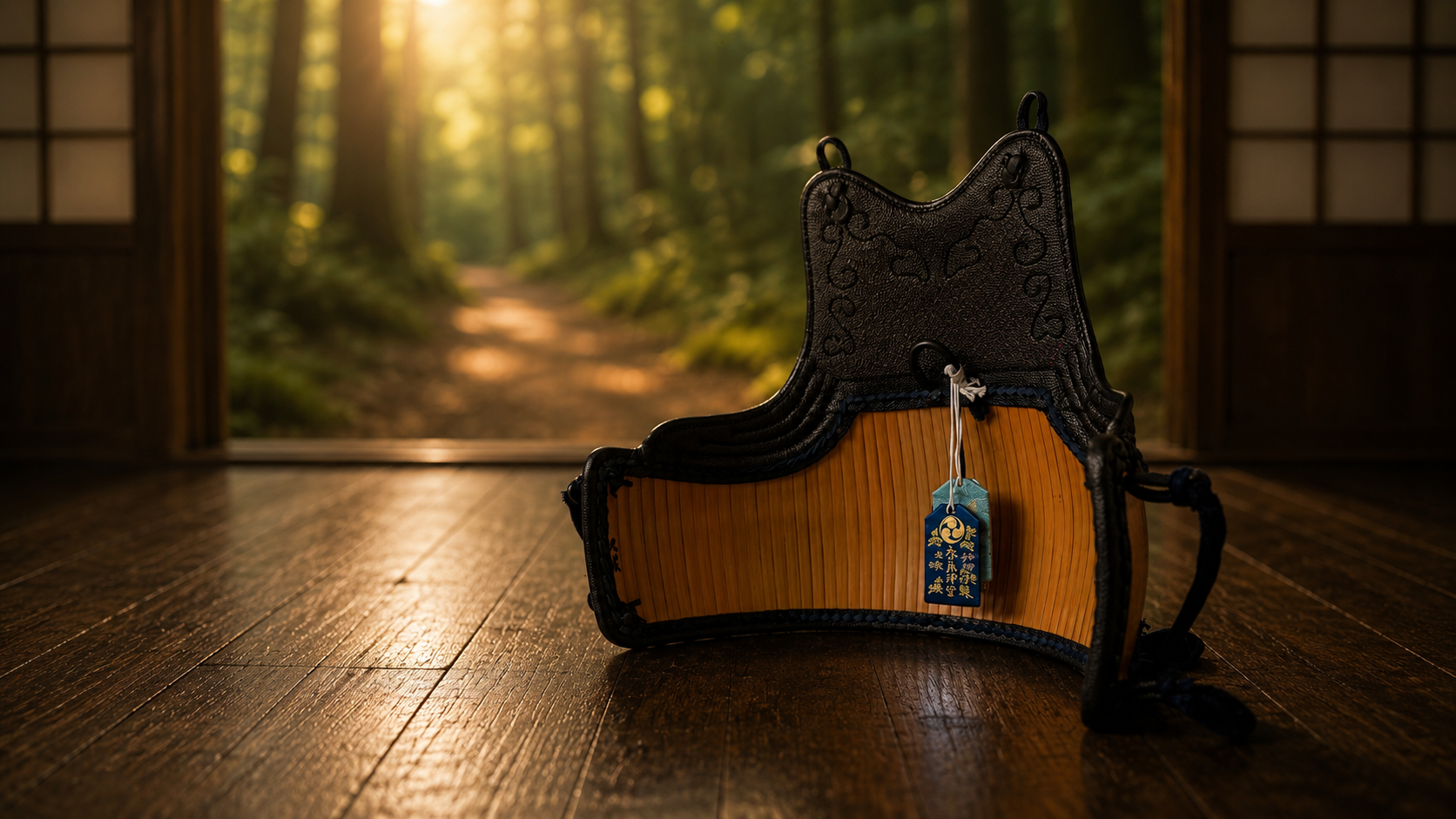
       MACHINE-STITCHED                       HAND-STITCHED (Tezashi)
   ┌───────────────────────┐                 ┌───────────────────────┐
   │ █ █ █ █ █ █ █ █ █ █ █ │                 │ ╳ ╳ ╳ ╳ ╳ ╳ ╳ ╳ ╳ ╳ ╳ │
   └───────────────────────┘                 └───────────────────────┘
    Uniform, rigid compression                Variable, organic density
    Compromises protective loft               Forms perfectly to the body
    Degrades quickly under use                Absorbs impact; lasts decades
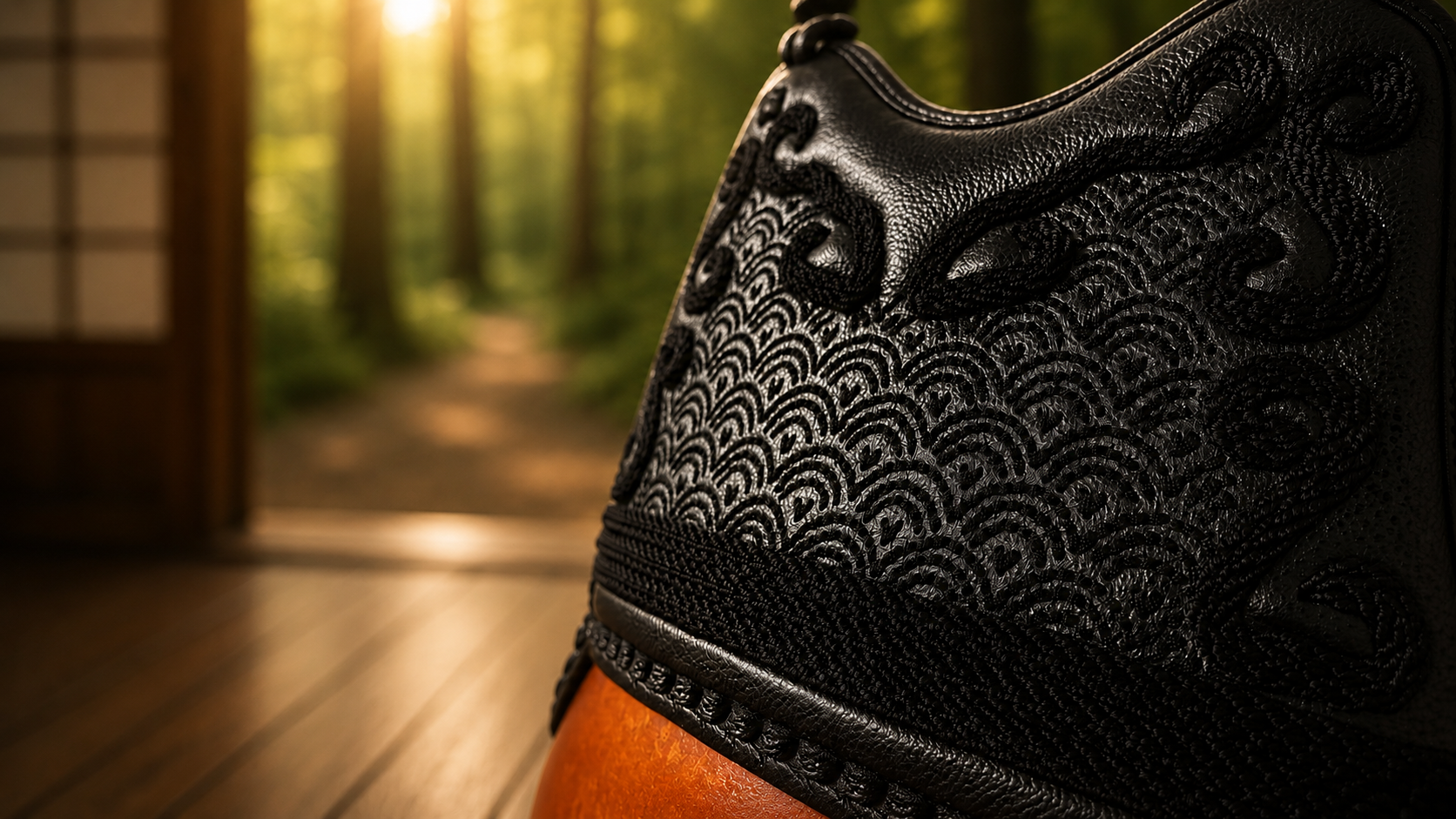
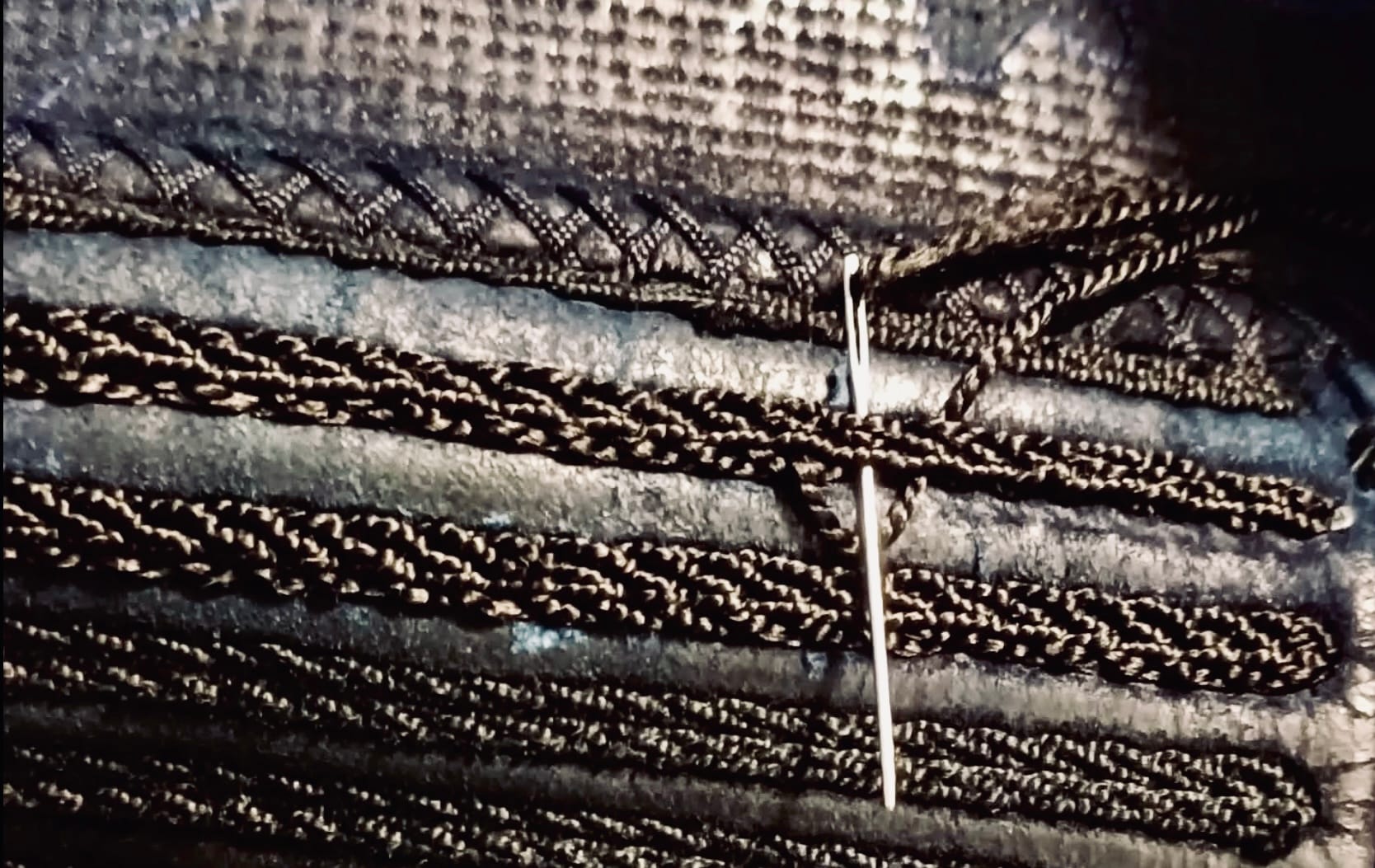
Take, for instance, a traditional Tezashi (hand-stitched) Bogu set. A single piece of indigo-dyed cotton and deerskin futon padding can require tens of thousands of individual stitches, each put in place by hand using a thick needle and waxed thread. The width of these stitches is measured in Bu (a traditional unit roughly equal to 3.03 millimeters). A master craftsman might spend months executing a 1.5 Bu grid. It is grueling, meticulous work that strains the eyes and calluses the fingers. A machine can mimic the look of these lines in an afternoon, but it cannot mimic the substance.
A hand-stitched Bogu possesses a variable density that a machine cannot reproduce. The artisan knows exactly where to compress the padding for flexibility-such as the joints of the Kote- and where to leave it thick and lofted to absorb the strike of a bamboo Shinai. Over decades of training, the armor conforms uniquely to the body of the practitioner, softening into an extension of the self while maintaining its defensive integrity.
Furthermore, a traditional Do-tai is built from individual slats of bamboo, precisely shaped, bound together, and finished with dozens of layers of natural Urushi lacquer. The lacquer must be dried in controlled, humid rooms, cured over months until it develops a deep, mirror-like luster that is virtually indestructible.
Under economic pressure, many workshops have transitioned to molded plastics or synthetic leathers. Yet, the true shokunin refuses this shortcut. To them, the creation of armor is an act of moral responsibility. They are protecting the physical safety and the spiritual dignity of the practitioner. The smoke rising from an old lacquer kiln or the scent of indigo-dyed leather in a traditional workshop is the tangible sign of a covenant kept with the past.
The Birth of Form: The Roots of Shu-Ha-Ri
To understand how these disparate worlds of wood, leather, and steel connect, one must go beyond the modern usage of Japanese martial concepts and trace them to their historical source. The paradigm of Shu-Ha-Ri (守破離) is often thrown around in modern corporate seminars as a synonym for skill acquisition, but its origins are profoundly artistic, literary, and philosophical.
The concept was first articulated by Zeami Motokiyo (c. 1363–c. 1443), the legendary playwright, actor, and aesthetic theorist who formalized Nō Theatre. In his foundational treatises on performance and art, Zeami described the lifelong journey of an actor not as a linear climb, but as a deep spiritual unfurling.
Later, in the 16th century, the tea master Sen no Rikyu expanded this into the realm of Sadō ((茶道), The Way of Tea, also known as Chadō or Chanoyu). Rikyu composed a famous poem that remains the definitive map of the concept:
規の定め 守りて破りて離るるとも 本を忘るな
"Obey the rules, break them, depart from them—but never forget the origin."
       [ SHU ] (守) ───► Protect, Mimic, and Inhabit the Ancestral Form
          │
          ▼
       [ HA  ] (破) ───► Break, Dissect, and Internalize the Principles
          │
          ▼
       [ RI  ] (離) ───► Transcend, Depart, and Become the Living Form
In its historical context, Shu-Ha-Ri breaks down into three distinct, non-linear phases:
- Shu (守 - To Protect/Obey): This is the phase of absolute submission. The apprentice does not ask "why." They do not attempt to be creative. They treat their own ego as a blank slate, mimicking the physical posture of the master, whether holding a brush, an adze, or a needle. In Shu, the form is protected by repeating it flawlessly.
- Ha (破 - To Break/Detach): Once the form is entirely bound to the muscle memory, the artisan or practitioner begins to break it apart. This is not an act of rebellious destruction, but of deep dissection. One experiments, tests the boundaries, and understands why the master moves the hand at that specific angle. You break the form from the inside out to discover its immutable core.
- Ri (離 - To Depart/Transcend): In this final stage, the artisan leaves the form behind entirely. They no longer think about the rule or the technique; the technique has become identical with their own nature. When a master watchmaker shapes a component by feel alone, or a swordsman moves without conscious thought (Mushin), they have departed from the rule precisely because they are the rule.
In the context of material culture, Shu-Ha-Ri is not merely a linguistic curiosity. It is a concept for an eternal restoration. It tells us that knowledge cannot be stored in a library or a digital archive; it must live in the body. Every time a young artisan picks up a chisel in a Swiss atelier or a needle in a Kyushu workshop, they are participating in a living restoration of human capability.
The Invisible Parallel: The Interlocking Traditions
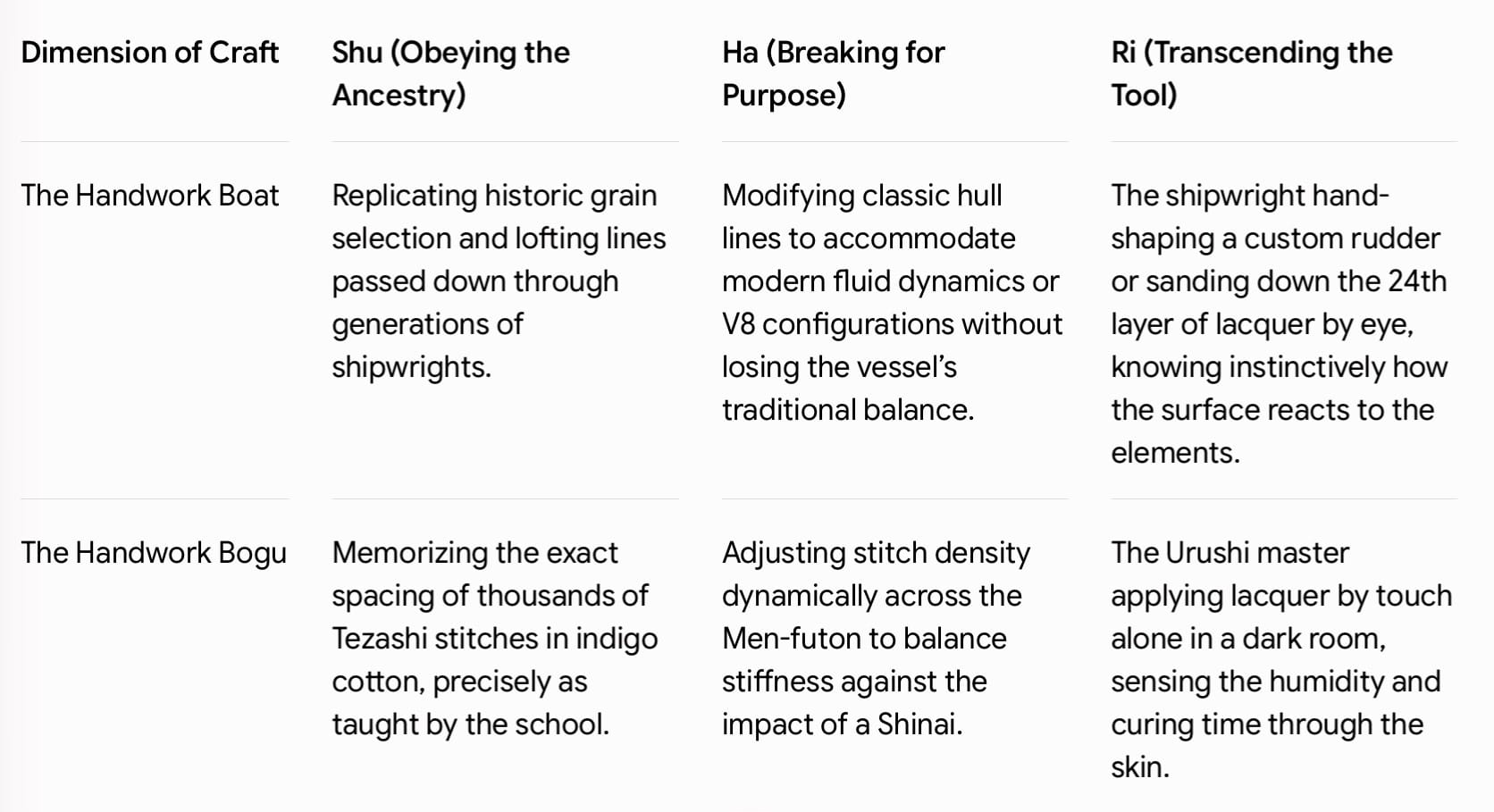
When you place a hand-built bluewater cruising yacht alongside a classic wooden Riva and a hand-stitched set of Bogu, the structural parallels between their execution and the philosophy of Shu-Ha-Ri become beautifully apparent. All these traditions understand that a true masterpiece requires a willingness to engage in tasks that are completely hidden from the ultimate consumer.
In the valleys of the Swiss Jura, old watchmaking houses spend weeks hand-angling internal bridges that will remain buried beneath a dial. In exactly the same manner, the shipwright and the Bogu craftsman build their monuments to human patience through the lens of the three stages:
The Cultivated Mind and the Allure of Sacrifice
Why is it that individuals of true cultural education and independent means are consistently drawn to these objects? It is certainly not for status; a hand-stitched Kote or an over-engineered sailboat hull does not announce itself to the untrained eye. It requires a shared vocabulary to be understood at all.
The attraction lies in the recognition of human sacrifice. In an age characterized by instant gratification and frictionless digital interfaces, we are surrounded by things that cost virtually nothing in terms of human spirit to produce. They are extruded, stamped, and shipped by the millions.
When a person engages with an object that required months of disciplined, human labor, they are connecting with a different philosophy of time. They are paying respect to the years the craftsman spent in the Shu phase, learning how to handle a tool, failing, and trying again.
This attraction requires a great deal of patience from the owner. You cannot order a custom Bogu or a custom cruiser and expect it to arrive next Tuesday. You enter into a period of waitina quiet, anticipatory discipline that acts as a cleansing palate cleanser against the frantic pace of modern life. The waiting becomes part of the object’s value. It changes your relationship with the item long before it ever enters your home or your hands.
Late Hours and Lasting Things
There is a quiet and gentle dignity that comes from knowing who you are and what you value, entirely independent of the noise outside. It is the feeling of sitting in a well-worn reading chair as the afternoon light fades across a room, watching the dust motes settle on old books, knowing that the things around you were built to outlast you.
To me, true handcraft luxury nowerdays is ultimately one act of rebellion. It is the refusal to accept that efficiency is the highest good. It is the understanding that some things are worth doing beautifully simply because they ought to be done beautifully. When an artisan chooses to spend an extra week perfecting a hidden joint, and a patron chooses to support that choice, they are together protecting a small corner of human meaning from being swept away.
The night grows late. I am concluding my notes with a view on the Kaiserplatz in Frankfurt from my quiet hotel room.The street noise outside has subsided, leaving only the soft hum of the city and the amber glow of a single lamp reflecting in a glass of malt. We live in a world that will continue to run faster, grow louder, and demand less of our attention while taking more of our time. But the workshops remain. The needles will still be threaded on early rainy mornings; the hulls will still be laid down to meet the waves; and the wheels of the ateliers will continue to turn in their quiet, rhythmic dance. The edge remains quiet, but it remains sharp.
Suggested Reading for the Quiet Mind
Should you wish to explore these histories and philosophies further during a quiet evening, consider turning to the following texts:
- 日本剣道具製作所 (Nihon Kendogu Seisakusho) | 伝統工芸・宮崎県伝統的工芸品:日向剣道具 (Japanese)
The definitive visual and historical record documenting the master craftsmen of Miyazaki, detailing the precise geometry, materials, and lineage of hand-stitched Bogu production. - 栄光武道具 (Eiko Budogu) | 剣道具の技と美 (The Technique and Beauty of Kendo Equipment) (Japanese)
An extraordinary deep dive into the evolution of Bogu design from the Edo period to the present day, exploring the functional choices behind hand-stitching widths and Urushi composition. - Soetsu Yanagi | The Unknown Craftsman: A Japanese Insight into Beauty
A profound meditation on the beauty of everyday objects made by nameless artisans, exploring why utilitarian items made with a pure heart possess a spiritual depth that conscious "art" often lacks. - Eugen Herrigel | Zen in the Art of Archery
A slim, essential volume that beautifully illustrates the spiritual realities of Shu-Ha-Ri and the concept of overcoming the ego through repetitive discipline. - Richard Sennett | The Craftsman
An intellectual exploration of the human desire to do a job well for its own sake, connecting the workshops of the ancient world with modern practices.