The Weight of the Blade: Why True Heritage Must Be Wielded, Not Displayed
Is true heritage dying in a glass case? From Swiss watchmaking to Japan's legendary katana smiths, this essay explores why true luxury must never become a static relic. A critique of interchangeable nostalgia and a reminder that history belongs only to those who dare to wield it daily.

There is a precise moment during the traditional tea ceremony, long before the matcha is whisked, when the host handles the “(o) chawan (tea bowl). It is not held with the tentative, trembling fingers of a museum curator petrified of an insurance claim. It is held with a firm, familiar reverence. It is an object designed for the hand, perfected by time, and validated only through its active utility.
Somewhere in the late twentieth century, the luxury industry contracted a collective bout of amnesia. Brands began treating their heritages like taxidermy; stuffed, mounted, and placed behind pristine glass cases to be peered at by tourists. We were told to admire the dust.
But true heritage is not a mausoleum. It is a lineage. And for those who understand that distinction, a crucial question has begun to circulate through the quietest rooms of the world: Do we actually deserve to be here, or have we simply become custodians of an interchangeable, nostalgic illusion?
1. The Trap of Interchangeable Nostalgia
It is easy to mistake longevity for purpose. A company can survive for two centuries simply by virtue of momentum and a well-guarded archive. Yet, look closely at the modern landscape of high horology and artisanal craft, and a subtle rot becomes apparent: the rise of the "museum piece."
When a brand relies solely on its history in a nostalgic way, it ceases to exist in the present. It becomes a ghost story told to justify a price tag.
[ Nostalgic Heritage ] —> Static —> Museum Piece —> Relic
[ Living Heritage ] —> Dynamic —> Active Tool —> Weapon
The samurai philosopher Yamamoto Tsunetomo wrote in the “Hagakure“:
"It is bad to introduce later-day trends into a pure lineage. Even if one's contemporary methods seem superior, they will eventually fade, but the original source holds a timeless rectitude."
When an old house loses its internal compass, it begins to mimic its competitors. The logos blur; the marketing campaigns start to look identical; the craftsmanship is outsourced to machines while the "story" is outsourced to agencies. The brand becomes interchangeable. It forgets that its original purpose wasn’t to be admired from afar, but to serve as an extension of the owner’s intent.
2. The Resurgence of Purpose: Finding the North Star
Thankfully, we are witnessing a quiet reformation. A few historic institutions are waking up to the realization that they had lost their way and are actively rediscovering their raison d'être.
Consider the quiet, mountainous valley of Le Sentier. For decades, “Jaeger-LeCoultre“ was known affectionately as the "watchmaker’s watchmaker," quietly supplying movements to the most prestigious houses in Geneva. Yet, there was a period where that identity felt buried under the sheer weight of modern commercial expansion. The purpose was obscured.
The rediscovery of their purpose didn't happen by looking forward to market trends; it happened by looking backward to their origins as a fully integrated manufacture. They remembered that a Reverso isn’t a fragile dress watch to be coddled; it was born out of the violent, elegant collision of polo mallets. It was meant to be flipped, struck, and scratched.
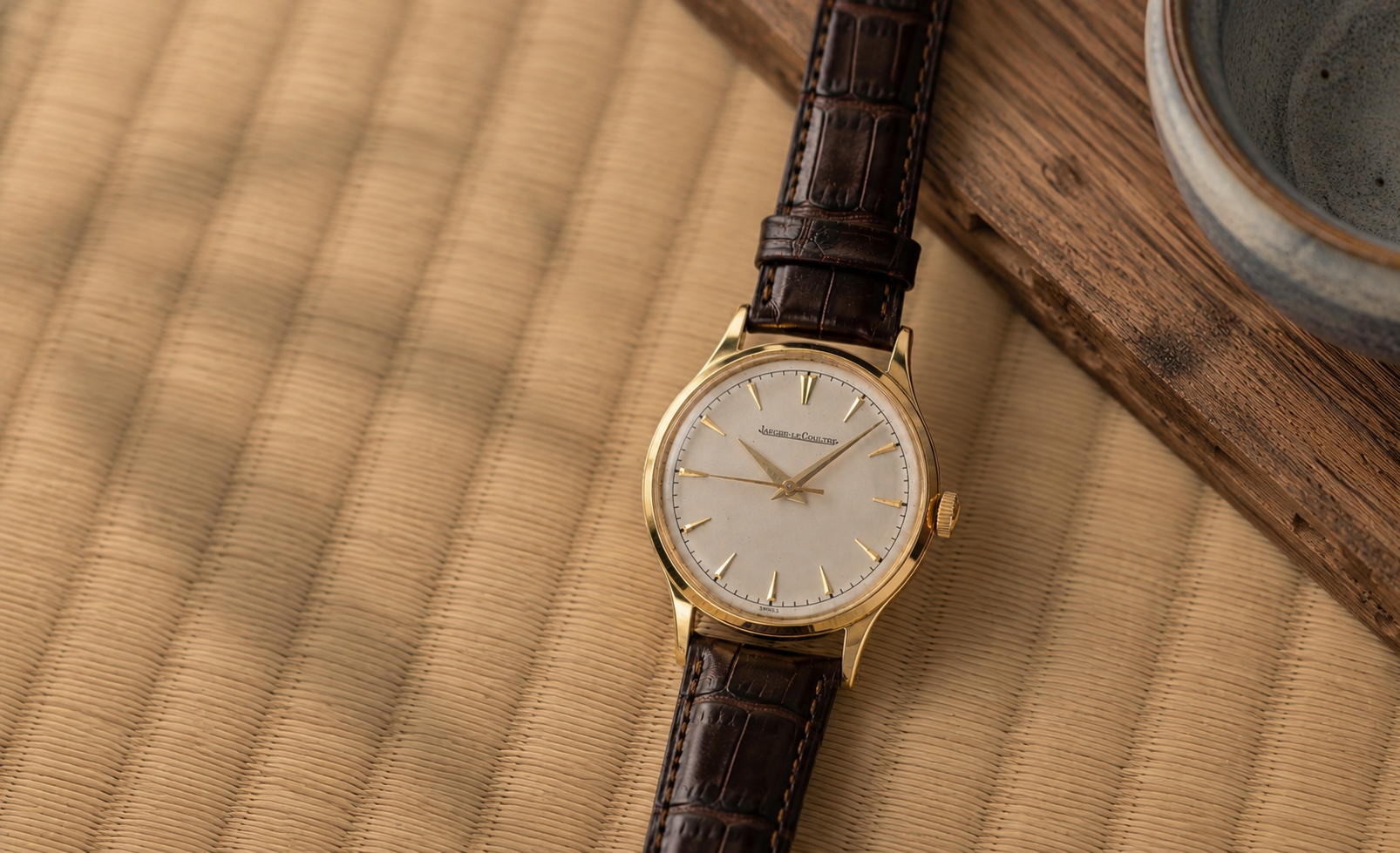
THE ANATOMY OF LIVING HERITAGE
| 1. THE ARCHIVE (The Root) | Historical blueprint & code |
| 2. THE MAESTRO (The Hand) | Unbroken line of execution |
| 3. THE WIELDER (The Owner) | Daily utility & wear |
This structural self-reflection mirrors the great internal crises of the Japanese sword-making traditions during the Meiji Restoration, when the “Haitōrei“ edict (廃刀令) banned the carrying of swords in public. The smiths who survived did not do so by weeping over the past; they survived by adapting their metallurgical mastery into tools that could still be used, preserving the soul of the steel, (Tamahagane,玉鋼) without the superficial vanity of the status symbol.
3. The Katana and the Balance Wheel: A Tale of Two Smiths
To understand why an object must live, we must look at how it is forged. The lineage of Breguet, for instance, is often spoken of in hushed, academic tones. We talk of Abraham-Louis Breguet as if he were a marble bust in a Parisian gallery. We dissect the tourbillon, the overcoil, the pare-chute suspension system.
But Breguet was an innovator obsessed with solving real-world problems: gravity, shocks, and the chaotic movements of maritime navigation. To treat a Breguet Classique as an delicate ornament is an insult to the engineering pragmatism of its creator.
This is exactly analogous to the legacy of Masamune (Gorō Nyūdō Masamune,五郎入道正宗), arguably Japan’s greatest blacksmith of the Kamakura period.
Masamune’s swords were not renowned because they were beautiful- though their hamon (the temper line) resembled mist over a river. They were renowned because, at a time when Japanese steel was notoriously impure and brittle, Masamune perfected a method of welding soft, low-carbon steel cores within a hard, high-carbon steel jacket.
The Result: A blade that could absorb incredible shock without breaking, yet retain an edge sharp enough to split a hair floating on water.
The Parallel: What Masamune did with layered steel to fight brittleness, Breguet did with the pare-chute system to fight the fragility of the balance staff.
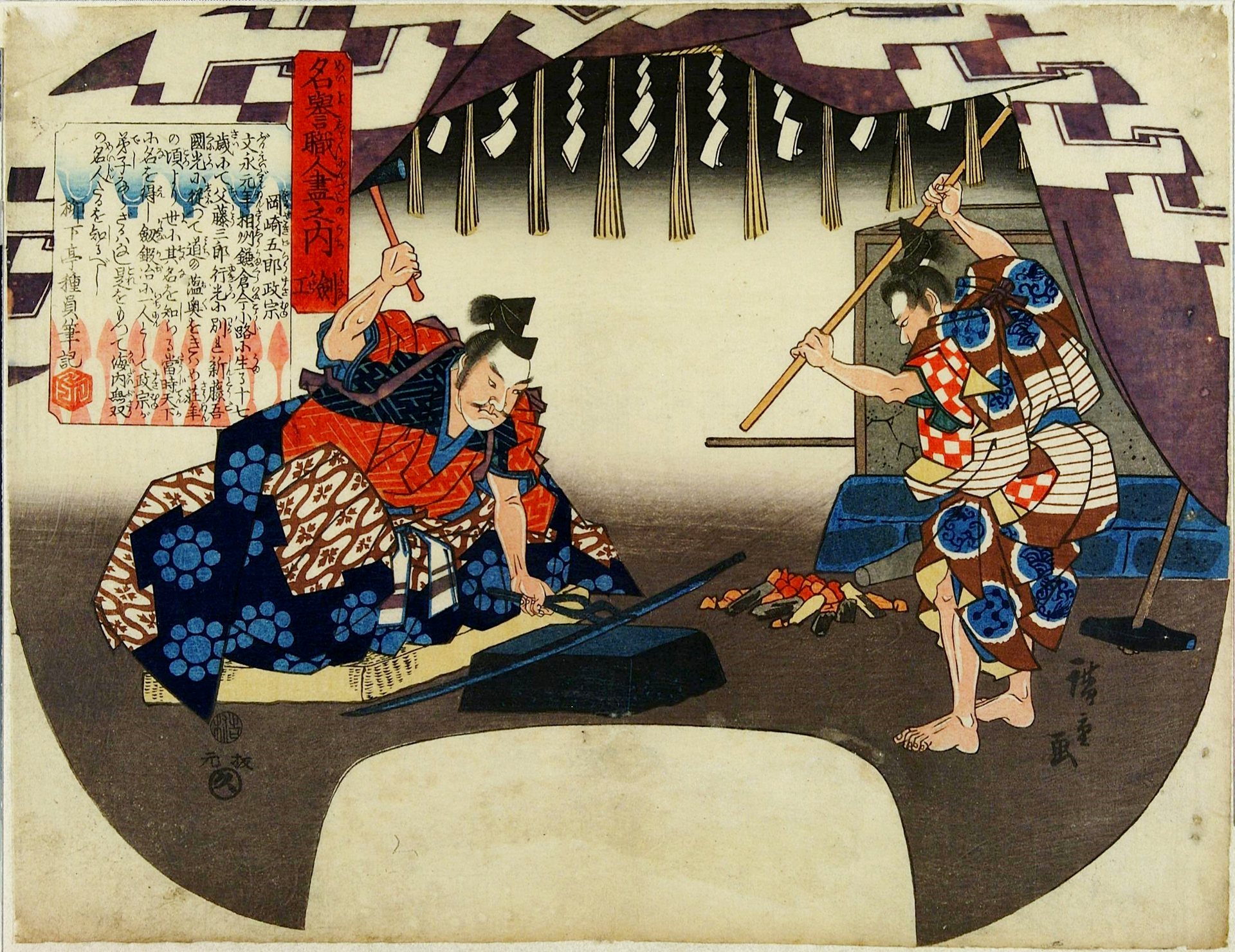
Now, contrast Masamune with his legendary rival, Muramasa. Myth holds that Muramasa’s blades were brilliant but inherently bloodthirsty, cursed with a violent instability. In horological terms, Muramasa is the modern, over-hyped avant-garde watch: visually arresting, aggressively marketed, but fundamentally lacking the balanced, serene equilibrium required to survive generations.
A Masamune blade, much like a classic Breguet, possesses a quiet luxury. It does not shout from across the room. It waits patiently to be drawn.
4. The Vulgarity of the Unworn Watch
There is a distinct, understated humor in watching the nouveau riche handle their acquisitions. They buy a highly complicated perpetual calendar, place it immediately into an automated winding box inside a humidity-controlled safe, and look at it via an app on their phone, right beside their crypto news.
This is the ultimate expression of interchangeability. If an object is never worn, it has no history. It only has a serial number.
True brands are not museum pieces. They are meant to be touched, scratched, and scuffed by the right people. A watch that passes through three generations of a family should bear the faint, elegant battle scars of dinners, arguments, contracts signed, and oceans crossed.
“There is nothing outside of yourself that can ever enable you to get better, stronger, richer, quicker, or smarter. Everything is within. Everything exists. Seek nothing outside of yourself.”
Miyamoto Musashi, The Book of Five Rings
If you are wearing a timepiece merely so that others recognize your net worth, you are seeking validation outside of yourself. You have missed the point of the code. The watch is not there to tell the world who you are; it is there to remind you of the discipline required to command time.
5. The Criterion of the "Right People"
How do we distinguish between the mere consumer and the true wielder of heritage? It comes down to a fundamental concept in Japanese aesthetics: Wabi-Sabi (侘び寂び), the appreciation of imperfection, transience, and the patina of time.
The Custodian (Nouveau Riche) | The Wielder
| Focuses on market resale value and pristine condition. | Focuses on the mechanical integrity and personal history. |
| Views the brand as a badge of entry into a social class. | Views the brand as an understated partner in a quiet life. |
| Keeps the object in a safe, isolated from the elements. | Wears the object daily, allowing the leather and metal to age. |
| Terrified of the first scratch. | Welcomes the patina as the beginning of the object's real life. |
A watch brand that embraces its living heritage understands that its true patrons are not those who buy a piece to lock it away. Its true patrons are those who treat the object with a demanding, functional respect.
When a master watchmaker spends three months hand-angling a bridge inside a case, they are not doing it for a camera lens. They are doing it because they know that somewhere, a person of discerning taste will occasionally look through the sapphire caseback and recognize the silent devotion of another human being.
6. The Verdict: Earning the Lineage
So, do we honestly deserve to be here?
Only if we honor the tool by using it. If we allow ourselves to fall into the trap of lazy nostalgia, buying things simply because they are old or expensive, we become as interchangeable as the fast-fashion commodities we despise. We become characters in a costume drama, playing the role of the aristocracy without possessing the underlying discipline.
The samurai did not polish his sword to look at his reflection; he polished it so that it would execute its duty without fail when the moment arose.
The next time you fasten a piece of living history to your wrist, whether it bears the signature of a Swiss master or the spiritual DNA of a Japanese forge…do not treat it like a relic. Wind it. Wear it. Let it take a dent or two.
After all, a blade left in its scabbard eventually rusts from its own loneliness.
References & Historical Mapping
Tsunetomo, Y. (1716). Hagakure: The Book of the Samurai. This text outlines the philosophical foundations of duty, lineage, and the rejection of superficial contemporary trends in favor of original purpose. I can warmly recommend the remarkable translation work of Professor Alex Bennett here.
Musashi, M. (1645). The Book of Five Rings (Go Rin No Sho). Specifically referenced for the concept of internal self-reliance and the functional master of tools over vanity. Please allow yourself the pleasure of an exceptional translation by Professor Alex Bennett here.
Satō, K. (1983). The Japanese Sword: A Hand Book. Tokyo: Kodansha International. Detail regarding the metallurgical innovations of the Sagami school and the specific techniques of Gorō Nyūdō Masamune.
Breguet, E. (1997). Breguet: Watchmaker Since 1775. Paris: Alain de Gourcuff. Documentation of Abraham-Louis Breguet’s engineering focus on utility and anti-shock mechanisms (pare-chute).
Cologni, F. (2006). Jaeger-LeCoultre: The Story of the Grande Maison. Milan: Rizzoli. An analysis of the manufacture's historical role as the mechanical backbone of horology and its modern revitalization of purpose.