True Grace Lies in Everything You Leave Out

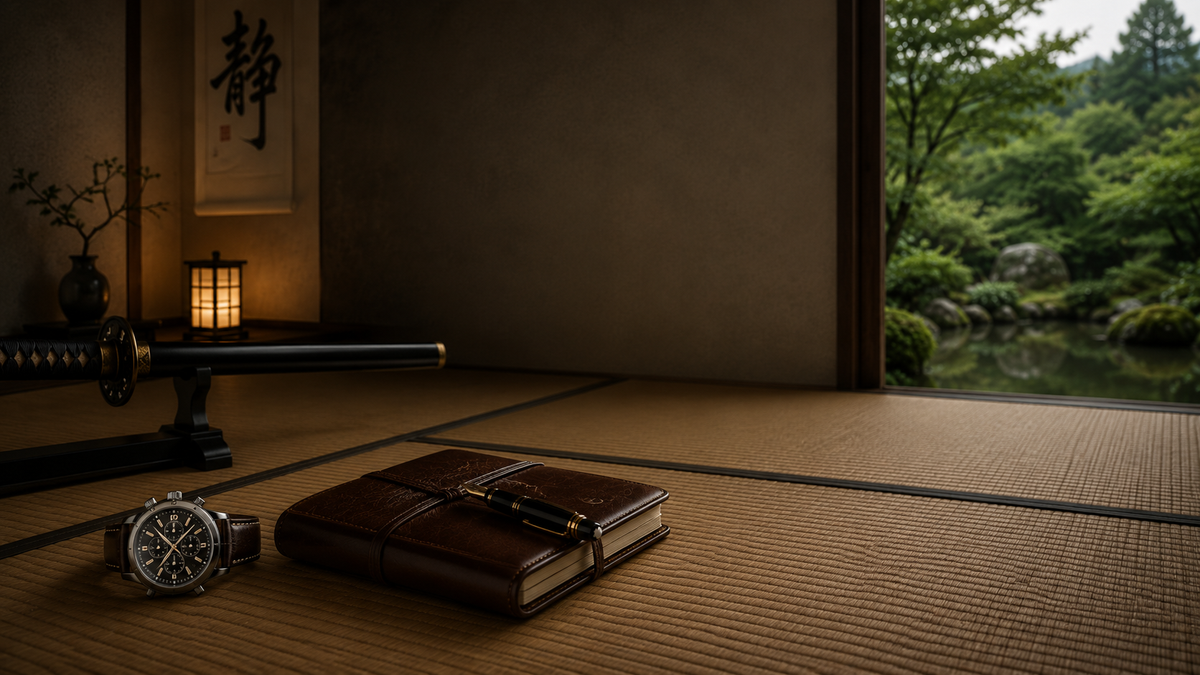
There are moments in a man’s life when the world insists on moving far too quickly, demanding noise where there ought to be rhythm, and volume where there ought to be grace. On those rare late afternoons, when the sunlight catches the amber depth of a well-aged single malt in your glass, you realize that true power has never been about making a scene. It is, and has always been, about the quiet edge.
The Quiet Edge
Take a seat and let me tell you about an encounter that completely shattered my comfortable assumptions about restraint, Budō, and the delicate art of living.
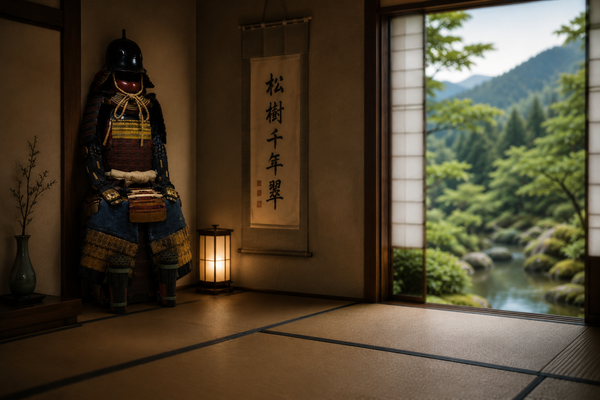
For years, I had convinced myself that if you wanted to study absolute commitment, unyielding focus, and the weight of a single decisive action, you looked to the martial traditions. You looked to the samurai, to the ancient texts like Yamamoto Tsunetomo’s Hagakure (translated by Prof. Alex Bennett) , or to the stark, sweat-stained dojos of Kendō where mankind spend decades learning the exact geometry of a single strike. In Kendō, when you step forward into your stance, your kamae, you are holding a universe of potential. When you cut, you cut „shikari“(しっかり), entirely. There is no halfway measure, no lukewarm trial run. Once the bamboo blade descends, the moment is sealed forever. You carry the total responsibility of that single instant.
A Suit, a Kendoka, and a Suburban Sanctuary
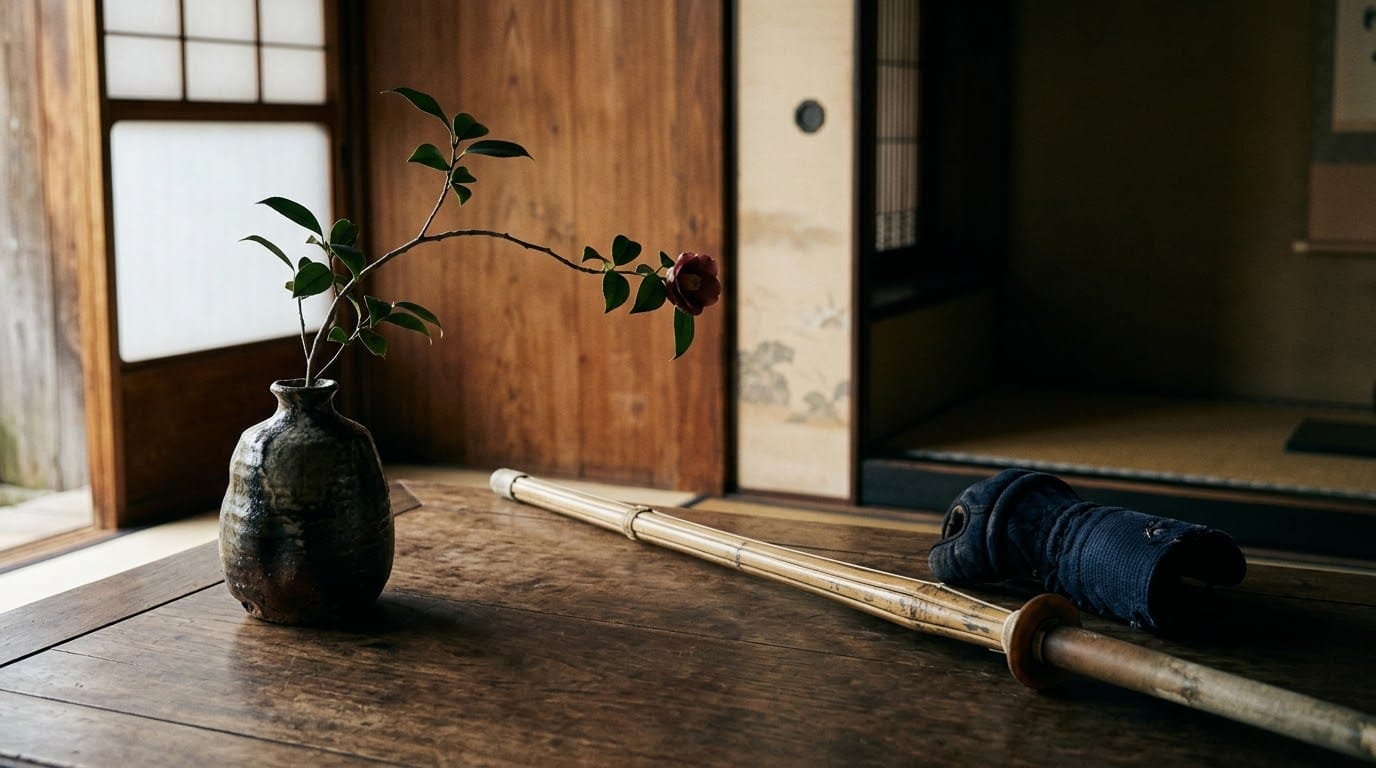
Then, quite by accident, I stumbled into a realization that knocked the smugness right out of my suit. It turns out that right under my nose, in the quiet, tree-lined suburban sanctuary of Ottobrunn, just outside Munich, lies an international epicenter of European floral mastery. Yes, you heard me correctly. Ottobrunn, of all places. It is home to Ayako Graefe- a legend in her own right, known in artistic circles by her master title Seiiku, which translates to Silent Elegance.
Ayako san is a Highest Degree Riji (理事), Master of the famed Sogetsu School of Ikebana. For context, Sogetsu was founded back in 1926 by the visionary Sofu Teshigahara, a man who essentially looked at centuries of rigid floral convention, smiled politely, and blew the doors off the institution by declaring that Ikebana could be done anytime, anywhere, with any material. It was the ultimate expression of Shu-Ha-Ri—first mastering the tradition, then breaking from it, and finally transcending into complete individual freedom.
Spiritual Lethality in Heavy Armor and Cherry Blossoms
Now, picture this. I sat down one morning with Ayako san expecting a gentle conversation about botany, petals, and living room centerpieces. Instead, over three hours of profound conversation, I realized I was sitting across from someone who wields a pair of shears with the exact same spiritual lethality as a master swordsman drawing a blade.
We began talking about the physical act of the cut. I asked her about Fudōshin (不動心); by that unwavering, immovable mind required in martial arts when delivering a final strike. In Kendō, kiri is the moment of truth. You cannot un-strike a sword. You cannot recall a blow midway through the air. You either commit with one hundred percent of your spirit, your body, and your breath, or you fail entirely.
Ayako san smiled, her eyes crinkling with a subtle, knowing humor, and explained that the moment her shears close on a living branch, the exact same spiritual sharpness is present. Once a stem is severed, it can never grow back onto the branch. You don't get a second take. There are no edits in live performance, whether you are wearing heavy armor or holding a delicate sprig of cherry blossom. You must look at the plant, see its essence instantly, and execute the cut with zero hesitation. That level of presence, that willingness to take complete ownership of an irreversible act, is the absolute foundation of both Kadō-the Way of Flowers-and Budō-the Way of the Martial Artist.
Negative Space and the Terrifying Beauty of Ma
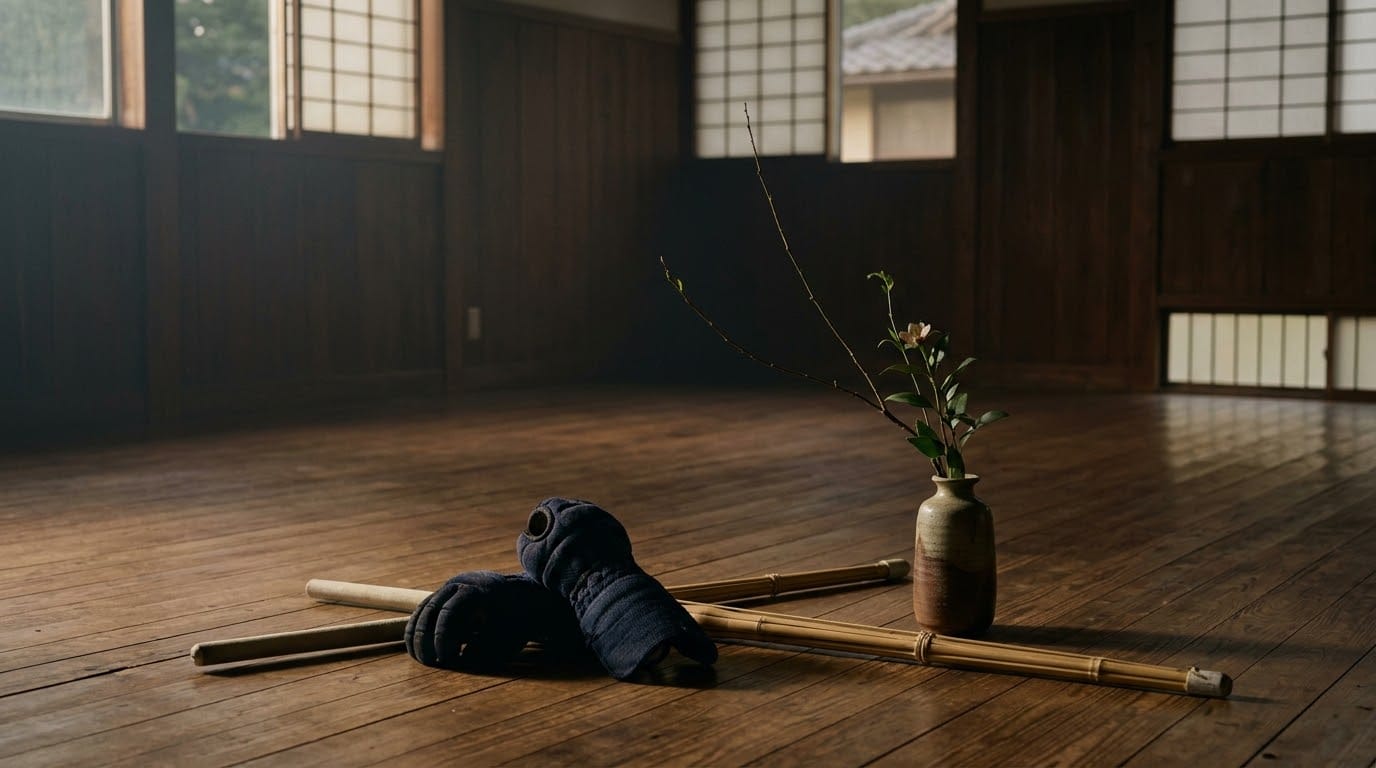
As the conversation went deeper, we drifted toward a concept that every man of substance eventually becomes obsessed with: the art of the empty space, or Ma(間).
If you look at cheap luxury, it is always shouting. It fills every square inch with gold leaf, loud logos, and restless clutter. True luxury, much like an accomplished gentleman or a master swordsman, understands the tremendous power of restraint. In Kendō, the empty space between two combatants is not dead air. It is a charged field of tension, a canvas of pure potential where metsuke-the focused gaze-reads the opponent's slightest intention before a muscle even twitches. In Japanese aesthetics, this is referred to as Fukaku(風格), a depth of character where no unnecessary motion or impulse is permitted to leak out.
When Ayako san creates an arrangement, her primary work is not adding elements; it is ruthlessly deciding what to eliminate. To sculpt the bare, essential truth of a branch, you must strip away the noise. What you deliberately leave out defines the entire work. The empty space around a single minimalist stem speaks louder than an overwhelming bouquet of fifty roses ever could. It teaches an eye raised in western abundance to appreciate the terrifying beauty of negative space. Doing something, and consciously choosing to refrain from doing something, both are deliberate acts of will.

The Coca-Cola Can, Mushin, and the Art of Inner Space
Which brings us to the vessels that hold our lives.
In Ikebana, the concept of Ichigo-Ichie (一期一会) - the idea, that this exact encounter between this specific flower and this specific vessel will happen only once in eternity- is paramount. The flowers are living, breathing, dying things. They need water, and that water sits inside a container. Now, here is where the philosophy gets delightfully deep. The vase is not meant to be the center of attention. It doesn't scream for notice, nor does it try to outshine the living blossoms it holds. Its entire purpose is to support, bound, structure, and provide a sanctuary for the form to express itself. Without the vessel, the flowers collapse into chaos and wither without water.
In Kendō, Kamae, your stance, your physical and mental posture- serves the exact same role. Kamae is not the winning strike, it is not the victory, and it is not the clever technique. It is the vessel out of which every possibility emerges.
And inside that outer vessel sits Kokoro, the mind, the spirit, the inner space. Here is the trick that took me decades to truly appreciate: a glass that’s already full can't hold anything new (you can’t pour water in a glass that’s already full). An old friend in Vietnam handed me that line back in nineties, and it took me a quarter of a century (and a fair bit of living) for the lightbulb to finally go off.
If a swordsman steps into the ring filled with his own ego, his anxiety, his desperate desire to score a point, or his fear of failure, he is completely full. He has no internal room left to react to his opponent. He is rigid, heavy, and easily broken. But if his vessel is empty; if he possesses Mushin(無心), the mind of no-mind, he can absorb the situation fluidly, adapt instantly, and let the correct action flow through him without effort.
Ayako san shared a delightful story from her youth that illustrates how life has a funny way of pushing us onto our true path. As a teenager, she participated in a school exchange program in Long Island, New York. During a family picnic in the park, while the other kids were setting the table, young Ayako wanted to contribute something special. She gathered a few wild grass flowers from the meadow and placed them neatly into an empty Coca-Cola can. Her host mother was so enchanted by this simple gesture that she exclaimed it was authentic Japanese Ikebana. She even went so far as to call the neighbors that evening to brag about having a master floral artist staying in her guest room.
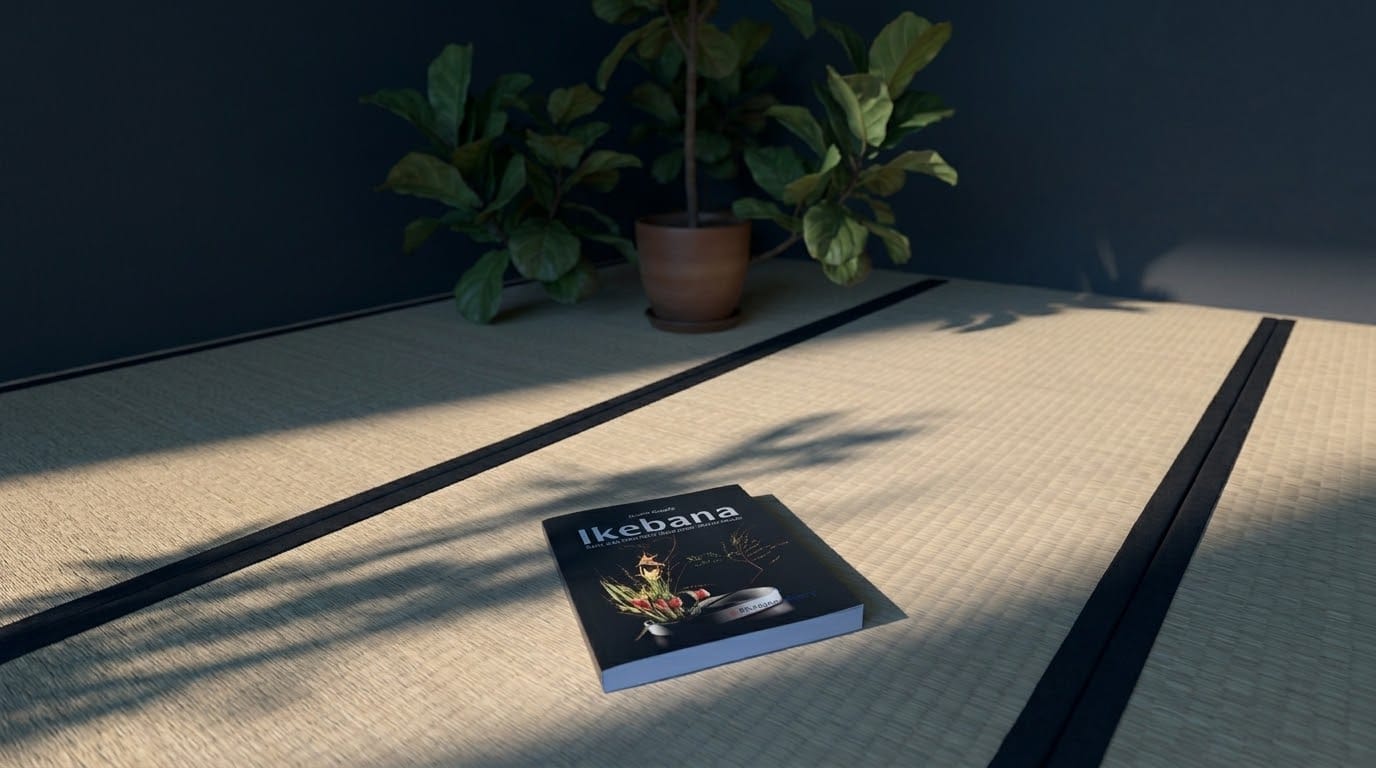
Ayako san confessed with a laugh that, at the time, she didn’t know much about formal Ikebana herself, but she certainly knew that a soda can with wild weeds wasn't quite it. Yet, that innocent American enthusiasm ignited something inside her. She made a silent vow right then and there that the moment she returned to Japan, she would study the art properly. And became addicted to it. Decades later, having written foundational literature on the subject, such as her landmark work Ikebana: Geist und Schönheit japanischer Blumenkunst, as well as her international text Contemporary Ikebana and its Traditional Background, she stands as one of the most respected authorities bridging Eastern philosophy and Western understanding.
An Exercise in Subtraction
So, what does any of this mean for us, sitting here with our scotch, navigating a modern world that seems utterly determined to measure worth by speed, noise, and constant acquisition?
It means that real refinement is an exercise in subtraction. It is the relentless removal of the superfluous until only character remains. Whether you are shaping a life, cultivating a career, perfecting a stance, or simply choosing how to spend an quiet evening, your outer posture is merely the vase. What truly matters is the clarity of the space you maintain within it.
If you are eager to dive deeper into this world, I cannot recommend enough picking up Ayako Graefe’s comprehensive standard work Ikebana: Geist und Schönheit japanischer Blumenkunst. If you wish to understand the classic roots of her school, seek out Sofu Teshigahara’s legendary Kaden Sho- translated as The Book of Flowers. And for those who want to understand the martial side of this exact same coin, Takuan Sōhō’s classic treatise The Unfettered Mind or the timeless wisdom of the Hagakure will give you the precise spiritual counterpart to the flower shears.
Build a strong vessel, my friend. Keep the inside empty, keep your edge quiet, and never, ever compromise on the cut.
Cheers.
Recommended Reading for the Quiet Mind
To explore these themes of discipline, craftsmanship, and the philosophy of the enduring object more deeply, consider spending an evening with the following texts:
Ayako Gräfe: Ikebana: Geist und Schönheit japanischer Blumenkunst
Sido Teshigahara: Kaden Sho (The Book of flowers)
Takuan Sōhō: The unfettered Mind
Yamamoto Tsunetomo: Hagakure (translated by Prof. Alexander Bennett)