The Way of Fūkaku: True Style is an Act of Character

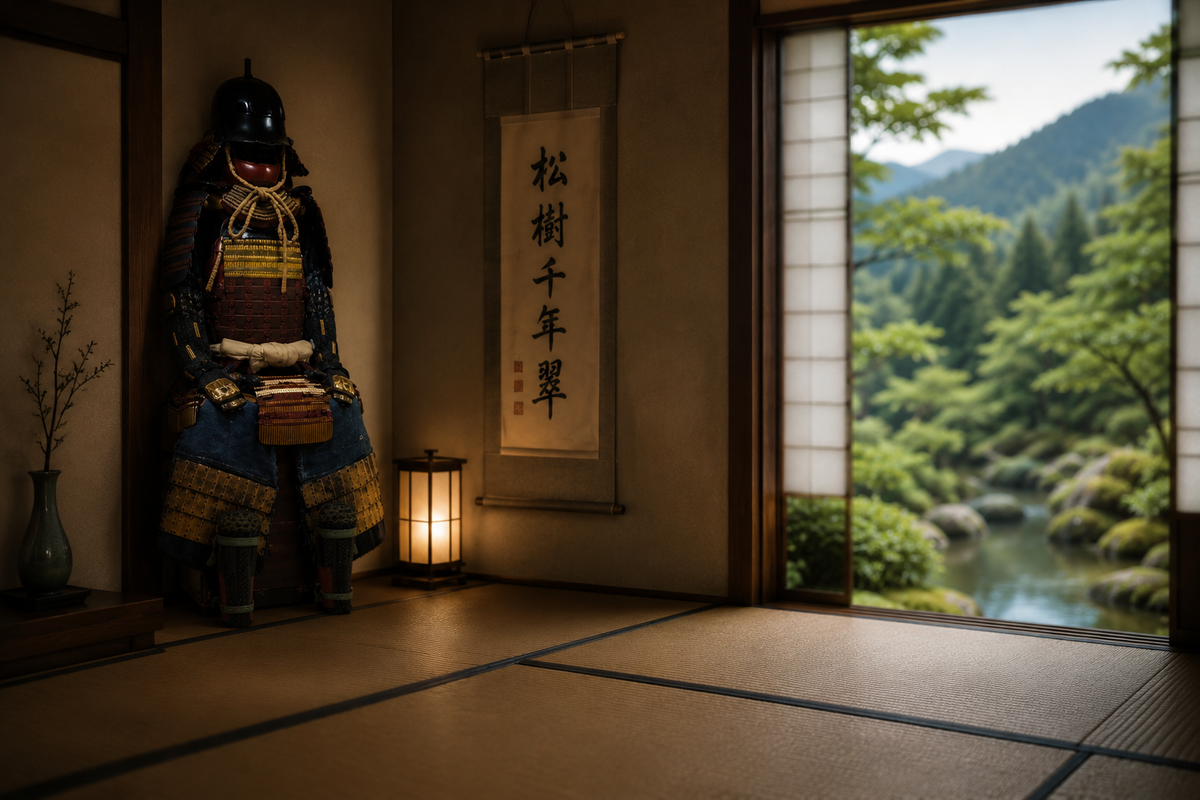
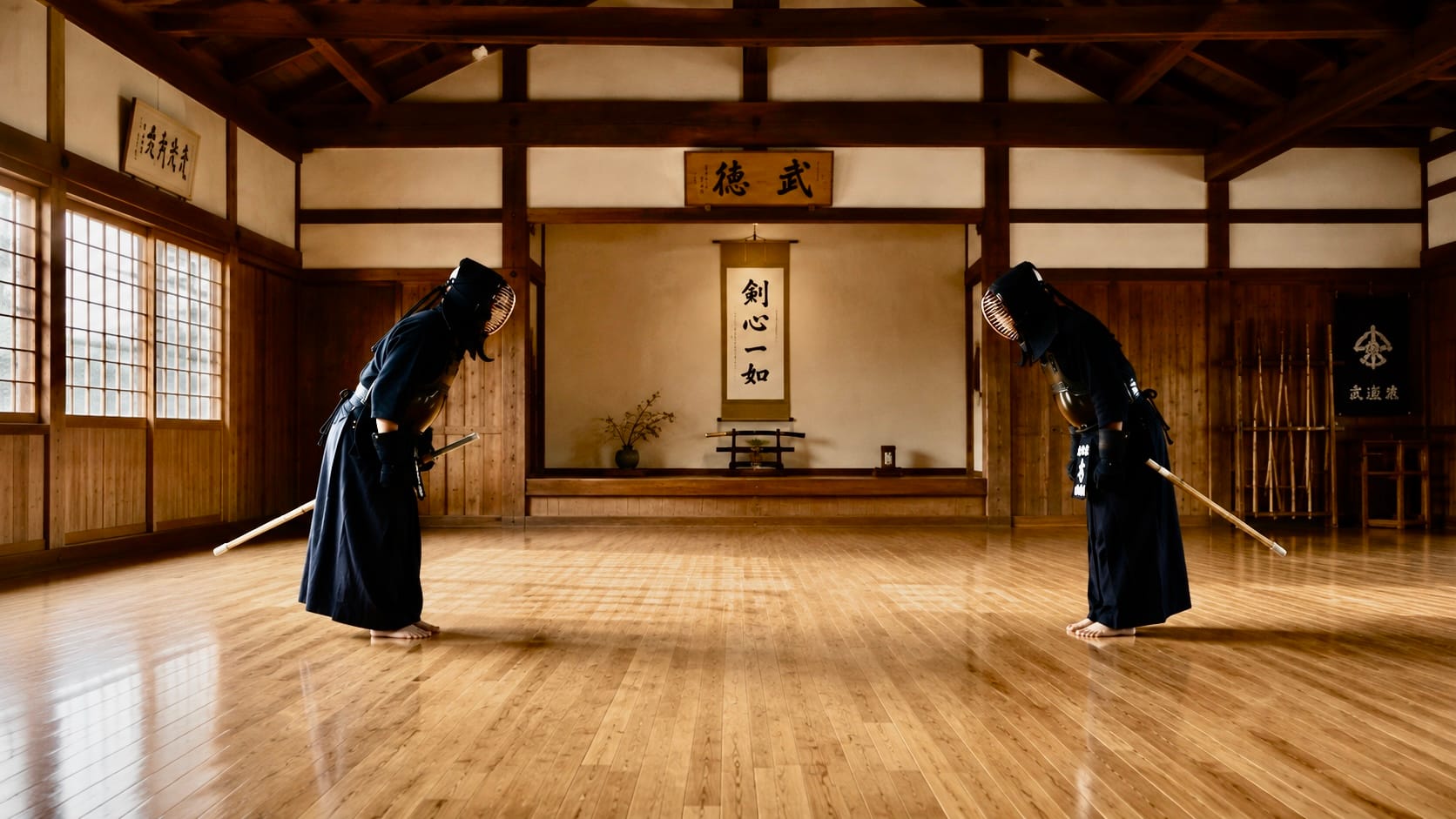
There is a moment in the wooden-floored dōjō, long before a single blow is struck, when absolute silence takes hold. Two practitioners stand opposite each other, separated by several paces. Neither has spoken a word. Neither has displayed an overt gesture of aggression or bravado. Yet, without a single movement, you instantly know who possesses decades of mastery and who is merely wearing the uniform.
In Japanese martial arts- and in Kendo in particular-this unspoken weight, this dignified aura, is known as Fūkaku (風格).
Translated roughly, Fūkaku refers to grace, character, and an unmistakable personal presence. But it is far deeper than mere poise. Let’s call it „Aura“. It is style elevated to the level of posture; posture refined into an ethos. It is the understanding that how you carry yourself in the world, how you handle your possessions, how you greet a friend or a stranger, how you hold your ground; is the ultimate reflection of your internal code.
For those who value discretion over display, quiet distinction over loud trends, and legacy over novelty, Fūkaku is the bridge between the discipline of the Kendōka and the understated art of living well.
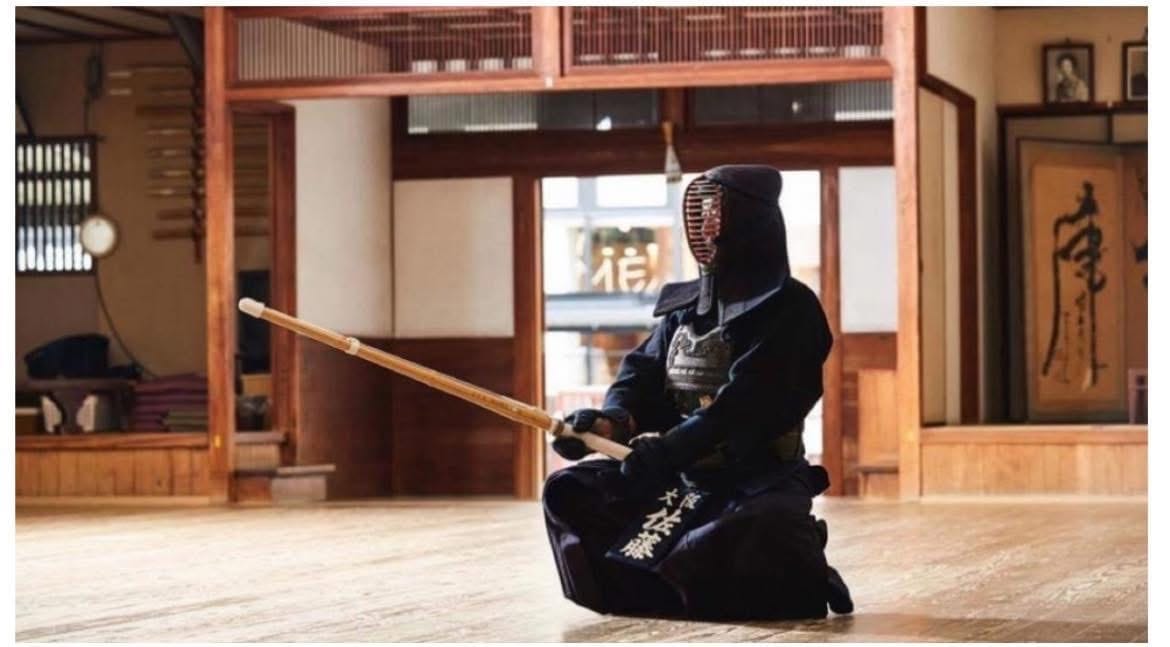
1. The Ten-Thousand-Step Grip: The Shinai as a Mirror
In Kendo, the practitioner wields a shinai, a sword constructed from four carefully split slats of bamboo, held together by leather fittings and a cord. To the uninitiated, it appears simple, almost utilitarian. But to the practitioner, the shinai is an exacting mirror of the mind and a prolonging of the himself.
The left hand rests firmly at the base of the handle (tsuka), quietly undertaking eighty percent of the work by providing stability and grounding while staying anchored and unseen. Meanwhile, the right hand rests lightly near the guard (tsuba), guiding direction with subtle pressure and remaining relaxed until the exact millisecond of contact.
If you grip the shinai too tightly out of anxiety or a desire to dominate, your movements become rigid, clumsy, and predictable. If your grip is too loose, you lose control at the first sign of pressure.
"When the mind is biased, the stance becomes distorted; when the stance is distorted, the sword loses its truth." (Traditional Budo Maxim)
Is this not precisely how one approaches a life of quiet luxury? The man of true standing does not clutch at status. He does not wear logos like armor to convince the room of his worth. His relationship with elegance is like the correct grip on a shinai: controlled from within, light on the surface, entirely devoid of desperate tension.
A bespoke suit from Savile Row or an unlined Vicuña coat from a historic Italian sartoriadoes not demand attention; it commands respect through its silhouette and the effortless manner in which its wearer moves within it. The moment you "try" to look elegant, the tension betrays you. True style, like a flawless strike, must appear inevitable. Consider the Italian art of sprezzatura - a term distilled in the 16th century by Baldassare Castiglione in The Book of the Courtier. It is the rare ability to make decades of rigorous discipline look like absolute second nature. No tension, no deliberate display, just an unbothered, quiet mastery. Step onto the dōjō floor, and it reveals itself instantly: a presence so composed and effortless that even in the heat of combat, calm remains the dominant force.
2. Outer Form and Inner Heart: The Convergence of Craft and Budo
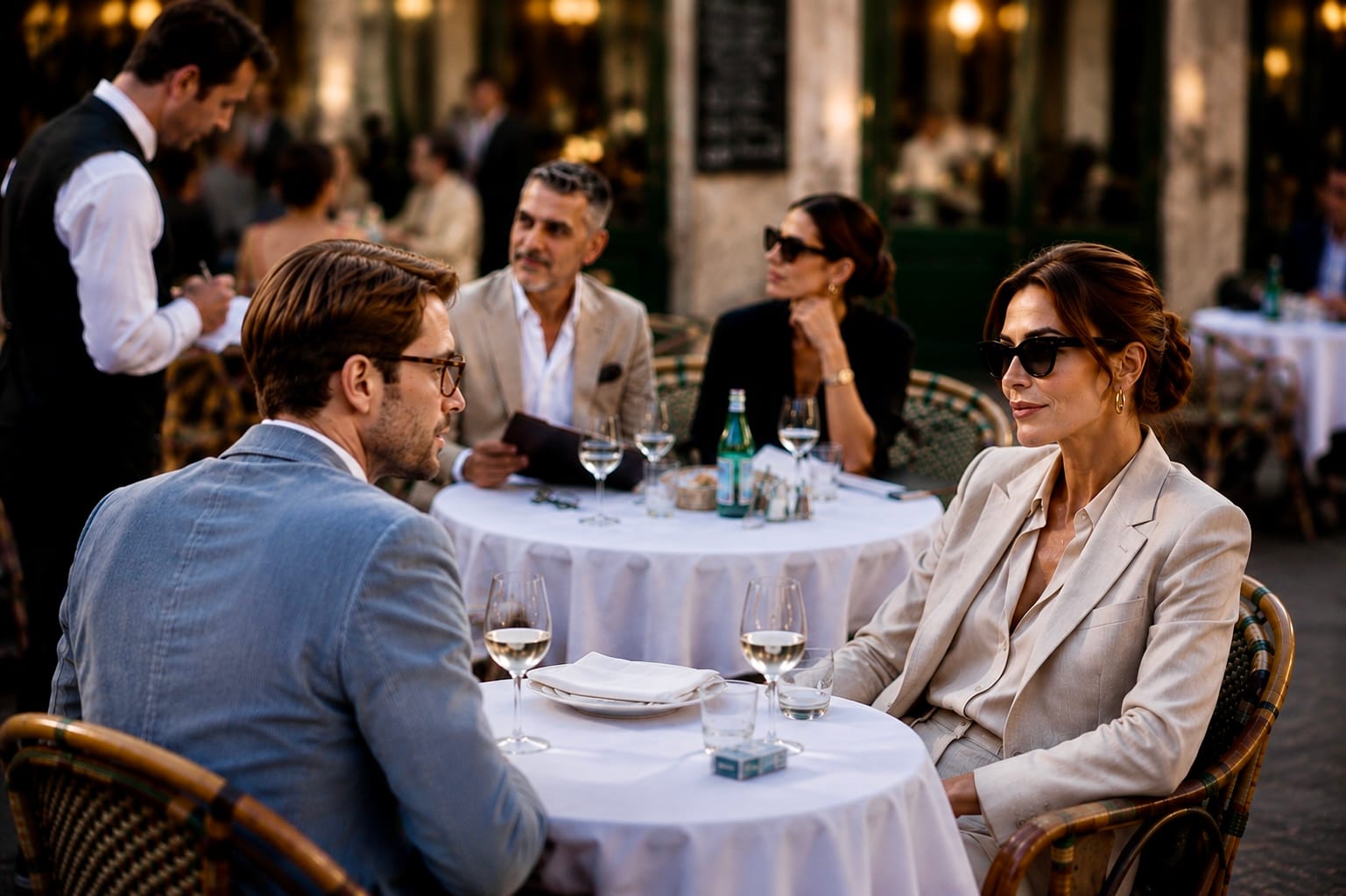
At first glance, the gentleman investing in a bespoke suit who moves through the world with warm, unshakeable politeness might seem worlds apart from the Kendo practitioner refining his strike and instructing others in the dōjō. Yet, at their core, both individuals are walking the exact same path. Allow me to go deeper on my thought.
The deepest common denominator between them lies in a foundational principle of classical Budo and understated style: the profound realization that outer form (Rei or style) and inner heart (Kokoro or character) are inseparable. Neither operates out of performative vanity. The suit is not a costume, and kindness is not a tactical calculation; rather, both are external manifestations of an internal order.
[ INNER DISCIPLINE (Kokoro) ]
│
▼
[ Meticulous Daily Practice / Craft ]
│
▼
[ Understated Outer Presence (Rei) ]
│
▼
[ FŪKAKU (風格) ]
The gentleman uses bespoke tailoring and quiet, friendly behavior as a frame for his character and personal discipline, just as the Kendo teacher uses the structure of the kataand the shinai as a vessel for self-refinement. In both realms, external choices represent an act of self-respect and a deliberate signal of reverence toward the surrounding world.
This brings us to the ancient martial concept of Rei (礼), a principle stating that Budo begins and ends with respect. Far from mere etiquette, Rei is the visible expression of goodwill, emotional control, and reverence for life. The man who greets others with genuine warmth exercises the exact same inner mastery as the Budo instructor who corrects a student with patience and quiet dignity. Both understand that true power never displays itself through loudness, arrogance, or aggression, but reveals itself through restraint, composure, and presence.
3. Hagakure and the Nobility of the Unseen Detail
Yamamoto Tsunetomo, the 18th-century samurai who dictated the famous treatise Hagakure ("Hidden by the Leaves"), wrote extensively about this exact synthesis of inner discipline and outer presentation. While Hagakure is often remembered for its stern meditations on duty and mortality, its core lies in the meticulous attention paid to the smallest, most fleeting details.
Tsunetomo noted that a samurai should care for his appearance not for the praise of others, but as a matter of personal honor. Before stepping outside, a warrior would neat his hair, ensure his garments were pristine, and apply a touch of subtle fragrance to his helmet - knowing full well he might not return at the end of the day.
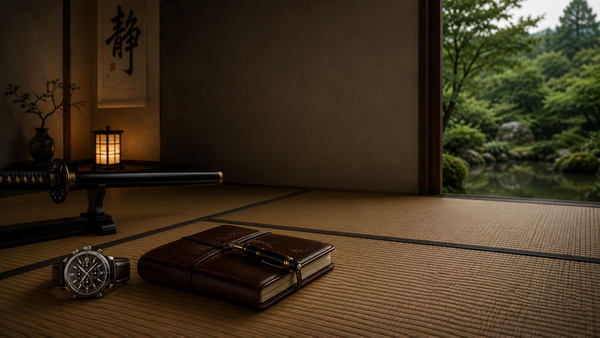
In the modern world, this mindset survives in the concept of Quiet Luxury. Where nouveau-riche consumption seeks validation through external visibility, the Old Money sensibility aligns with the old japanese devotion to the unseen detail. This is evident in the double-stitched canvas of a hand-welted shoe that no one else will ever inspect, or the tactile weight of a mechanical movement handcrafted in Glashütte ticking against your wrist under a plain linen cuff. It lives in the preference for a well-cared-for leather briefcase passed down through two generations over a fresh-off-the-runway seasonal bag.
When we cherish beautiful details- not as showpieces, but as quiet companions in our daily routine, we enter into a covenant with craftsmanship. We honor the master who spent eighty hours shaping the timber or weaving the wool, and in doing so, we elevate our own daily existence.
4. The Eternal Bond: Time, Patina, and Continuity
Why do certain objects and disciplines hold us captive across decades? Why does a mature man find the same profound peace stepping onto the dōjō floor as he does pulling on a twenty-year-old cashmere scarf?
Because both are expressions of an eternal bond (Kizuna) built on reverence, time, and endurance. Both path-walkers share a deep respect for maturation, mirroring the traditional martial concept of Shuhari—moving from fundamental discipline to effortless mastery.
In Kendo, you do not discard a shinai the moment a slat becomes slightly worn. You dismantle it. You shave the bamboo slat with a small blade, oil the wood, re-align the leather, and re-bind the cords. Through this ritual of maintenance, the tool becomes an extension of your body. You develop a relationship with it.
This exact principle governs the world of authentic, heritage-driven brands. A true house of legacy, whether it is a century-old Japanese indigo dye studio in Tokushima, a centuries-old gunsmith in London, or an artisanal bootmaker in Vienna; does not create products designed for short life cycles. They craft heirlooms intended to be maintained, repaired, and worn until they absorb the very character of their owner.
Dimension | Disposable Luxury | Quiet Luxury & Budo |
Motivation | Status seeking & trends | Self-respect & inner harmony |
Visual Language | Loud logos & bold prints | Texture, cut, tone, & proportion |
Relationship to Time | Fades with the season | Improves with patina & age |
Internal Equivalent | Superficial performance | Fūkoku (風格) & Mindful presence |
Over time, a fine suit and well-mannered demeanor integrate seamlessly with the individual, acquiring a patina of lived experience. Similarly, decades of Kendo practice strip away awkward effort until the strike appears entirely natural. Both individuals have outgrown the need for flashiness; they no longer seek fleeting effects, but cultivate what lasts.
When you treat your surroundings and interactions with this level of reverence, your home, your wardrobe, and your practice cease to be mere background noise. They form an environment that anchors you against the chaos of an increasingly fast, disposable world.
Essential Literary Foundations: Where Budo Meets Heritage
For the practitioner of Budo seeking to deepen his understanding of timeless style, standard fashion guides offer little value. True refinement requires literature that treats aesthetics as an expression of discipline, philosophy, and historical continuity.
The Philosophy of Craft & Shadow
In Praise of Shadows (In'ei Raisan) by Jun'ichirō Tanizaki provides the ultimate gateway into classical Japanese aesthetics. Tanizaki explores how genuine beauty resides not in garish illumination or ostentatious display, but in texture, age, patination, and the quiet dignity of subtle shadows.
The Beauty of Everyday Things (Mingei) by Soetsu Yanagi offers a profound meditation on traditional artisanry. Yanagi, founder of the folk crafts movement, illustrates how utility, selfless dedication, and hand-craftsmanship imbue physical objects with a lasting soul—a concept immediately recognizable to anyone who cares for a shinai or bespoke garment.
The Ethos of Conduct & Unseen Mastery
The Book of the Courtier (Il Cortegiano) by Baldassare Castiglione introduces the Renaissance concept of Sprezzatura—the ability to exhibit immense skill, grace, and elegance with an air of complete effortlessness. In martial terminology, this corresponds directly to Mushin, the state of unforced, natural action achieved through decades of practice.
The English Gentleman by Douglas Sutherland examines the unwritten rules of old-money conduct. Stripping away superficial wealth, Sutherland focuses on understated manners, emotional restraint, and an unwavering sense of duty, mirroring the warrior's behavioral code (Reigi).
Heritage, Horology, & Tailoring
Bespoke: Savile Row Ripped and Tailored by Richard Anderson captures the rigorous discipline, apprenticeship, and relentless pursuit of structural perfection within London's most revered tailoring houses.
A Man & His Watch by Matt Hranek demonstrates that in the realm of quiet luxury, timepieces are valued not for their market price or flashiness, but for their personal provenance, inherited stories, and enduring mechanical integrity.
Kendo: Culture of the Sword by Alexander C. Bennett remains the definitive historical examination of Kendo's evolution from a battlefield science into a lifelong path of spiritual and personal refinement.
Final Thoughts: Living with Posture
Style is not what you wear when you want to impress a room; style is how you stand when no one is watching.
In the end, Fūkaku demands that we show up with full presence. Whether holding a shinaiin the center of a dōjō, signing a contract with a vintage fountain pen, or pouring a glass of aged whisky for an old friend, let the gesture be clean, deliberate, and quiet. Respect the detail. Honor the legacy.